
Posted in NewsTagged , , , , , , , , ,

Temporary Vehicle Graphics for Leased, Rented, or Short-Term Fleet Assets

Not every company owns every vehicle it puts on the road.

Some fleets include leased vans. Others use rented vehicles for seasonal demand, special events, regional launches, acquisitions, overflow capacity, or short-term campaigns. As a result, brand teams and fleet managers often face the same problem: the vehicle needs to look branded, but the graphics cannot stay there forever.

That is where temporary vehicle graphics can help.

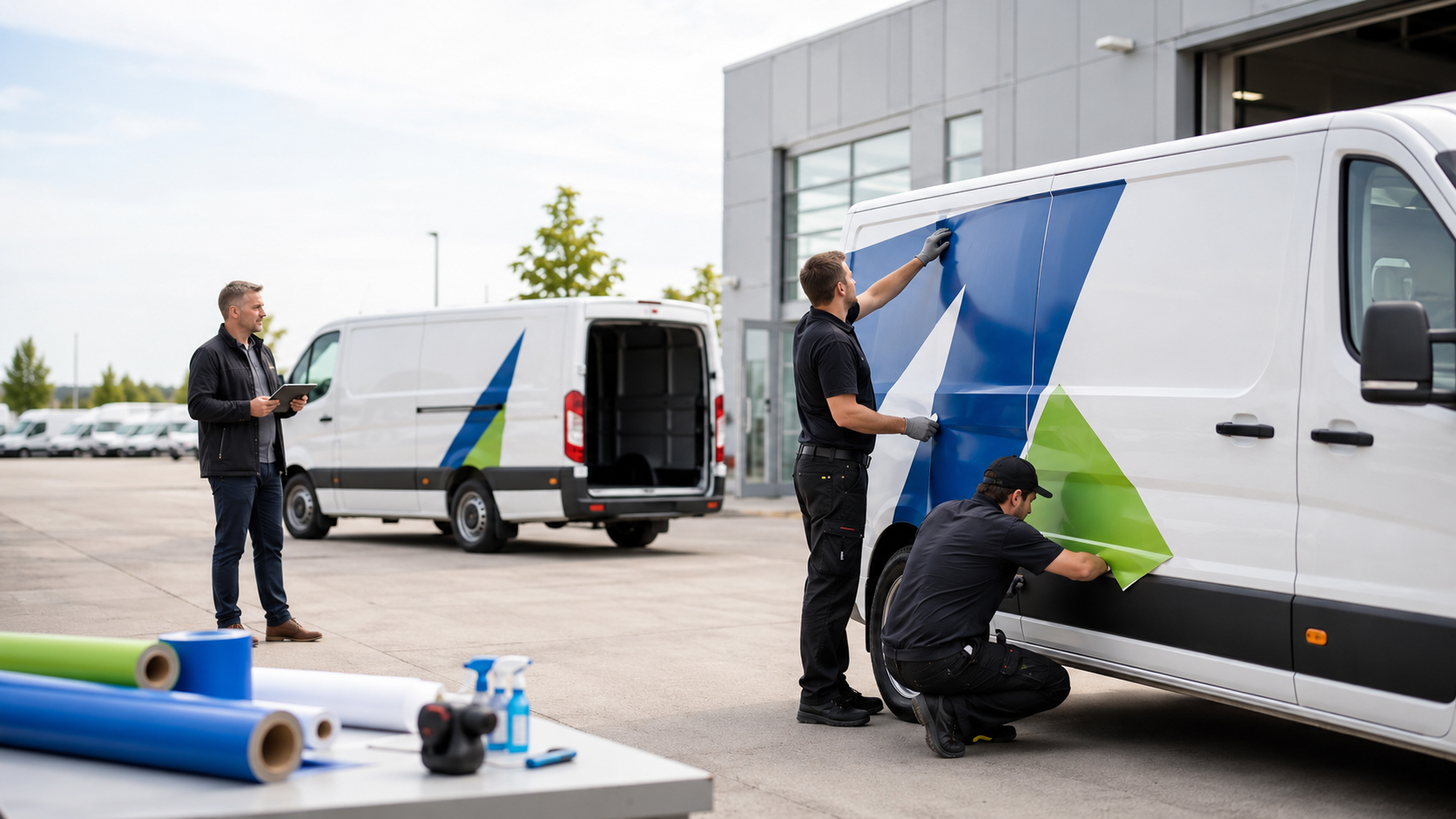
Instead of treating every fleet asset like a permanent wrap project, companies can use removable or changeable graphics to support short-term needs. They can brand a leased vehicle, promote a campaign, cover a seasonal route, or create consistency across a mixed fleet without committing to a permanent graphics solution.

However, temporary does not mean careless. The graphics still need to look professional, stay in place, come off cleanly, and protect the brand while the vehicle is in use.

Why Vehicle Graphics Matter for Modern Fleets

Fleet ownership has changed.

Many companies no longer rely only on vehicles they own outright. Instead, they may lease vehicles, rent units during busy seasons, use temporary assets after an acquisition, or add vehicles quickly when demand spikes.

That flexibility helps operations move faster. However, it also creates a branding problem.

A rented white van, an unmarked leased box truck, or a mismatched temporary vehicle can weaken the brand experience. Customers may not recognize the company. Drivers may arrive in vehicles that look unfinished. Local teams may improvise with magnets, decals, or inconsistent graphics.

Temporary vehicle graphics give companies a way to solve that problem without overcommitting.

When Temporary Graphics Make Sense

Temporary graphics work best when the vehicle has a limited purpose, limited ownership window, or limited branding need.

For example, companies may use temporary vehicle graphics for:

  • Leased fleet vehicles
  • Rental vans or trucks
  • Seasonal delivery demand
  • Short-term service routes
  • Event vehicles
  • Pilot programs
  • Regional launches
  • Temporary acquisitions
  • Franchise or branch transitions
  • Campaign-specific promotions
  • Vehicles waiting for a permanent rebrand
  • Overflow units during peak demand

In each case, the company needs the vehicle to look credible and brand-right while it is on the road. At the same time, the company may need to remove the graphics later without damaging the vehicle or violating lease terms.

Temporary vs. Permanent Wraps

Permanent fleet graphics work well when the company owns the vehicle, plans to keep it in service, and wants long-term brand consistency.

Temporary vehicle graphics solve a different problem.

They help companies brand vehicles when the timeline, ownership, or business purpose may change. For that reason, they usually focus on flexibility, clean removal, and efficient installation.

A permanent wrap may make sense for a core fleet vehicle that will represent the brand for years. However, a temporary graphic may work better for a leased van, rental truck, seasonal route, or short-term campaign.

The right choice depends on how long the vehicle will stay in service, who owns it, what the lease allows, and how visible the vehicle will be to customers.

Temporary Wraps for Leased Vehicles

Leased vehicles create one of the most common use cases for temporary graphics.

A company may need the vehicle to represent the brand every day, but the lease may restrict permanent changes. Before adding graphics, fleet managers should review the lease agreement and confirm what types of non-permanent branding the lessor allows.

In many cases, removable vehicle graphics can give companies a practical option. 3M specifically notes that temporary graphic wraps can help companies brand leased trucks and vans with removable wrap films.

Even so, teams should not assume every leased vehicle works the same way. Before installation, they should confirm the lease terms, vehicle condition, paint quality, material choice, removal plan, and return requirements.

Graphics for Rental Vehicles

Rental vehicles create another challenge.

A company may need extra capacity for a few days, weeks, or months. However, a rental vehicle often arrives with no branding at all. That can create problems when drivers visit customer sites, make deliveries, or support a public event.

Temporary vehicle graphics can help rental assets look more professional and consistent with the rest of the fleet.

Still, rental vehicles require extra care. Companies should confirm whether the rental agreement allows graphics. They should also choose materials designed for short-term use and plan removal before the vehicle returns.

The goal is simple: make the rental vehicle support the brand while it works, then return it cleanly when the job ends.

Promotional Wraps for Seasonal Campaigns

Seasonal demand often forces companies to add vehicles quickly.

Retail, food service, delivery, logistics, home services, healthcare, utilities, and event-driven businesses may need more vehicles during peak periods. However, those vehicles may not stay in the fleet long enough to justify permanent graphics.

In that case, temporary vehicle graphics can support the season without creating long-term commitments.

For example, a company may use short-term graphics for a holiday campaign, summer service push, product launch, local event, or limited-time offer. 3M describes changeable graphic films as a flexible option for short-term needs, including seasonal campaigns and rentals.

That flexibility matters because the campaign can end, the graphics can come off, and the base vehicle can move on to its next use.

What to Consider Before Using Temporary Vehicle Graphics

Temporary graphics still need planning.

Before installation, fleet managers and brand teams should answer a few practical questions:

  • Who owns the vehicle?
  • What does the lease or rental agreement allow?
  • How long will the graphics stay on the vehicle?
  • What condition is the paint in?
  • Does the vehicle need cleaning, repair, or prep first?
  • Will the graphics need to withstand weather, washing, or road grime?
  • Who will remove the graphics?
  • Where will removal happen?
  • What proof does the company need before and after installation?
  • Does the design need to match permanent fleet graphics?

These questions prevent temporary branding from becoming a permanent headache.

Why Material Choice Matters for Temporary Vehicle Graphics

Material choice matters because temporary graphics need to do two things well: stay on the vehicle during use and come off when the job ends.

A short-term graphic still has to handle road conditions, washing, sun exposure, weather, and daily use. At the same time, the material should support clean removal based on the vehicle surface, timing, and application.

That is why companies should not treat temporary graphics like basic stickers. The material, adhesive, laminate, surface prep, and removal plan all affect the final result.

If the team chooses the wrong material, the graphics may fail early, leave residue, damage the surface, or take too long to remove.

Temporary Vehicle Graphics Still Need Brand Standards

Temporary should not mean inconsistent.

Even when graphics stay on a vehicle for a short time, they still represent the company in the field. Customers do not know whether a van is leased, rented, temporary, or permanent. They only see the brand.

Because of that, temporary vehicle graphics should still follow brand standards.

That includes logo placement, colors, message hierarchy, phone numbers, URLs, safety markings, and any regional or compliance requirements. If the temporary vehicle works beside permanent fleet vehicles, the design should feel intentional, not improvised.

Temporary Vehicle Graphics Can Help During Rebrands and Acquisitions

Temporary graphics can also help during messy transition periods.

After a merger, acquisition, or rebrand, companies may not have every vehicle ready for a permanent update. Some vehicles may retire soon. Others may belong to a lease program. Some may need body work before graphics installation. Others may operate in markets that need a faster brand change.

In those situations, temporary vehicle graphics can bridge the gap.

They can cover old marks, introduce the new brand, or create a more consistent fleet appearance while the company works through the larger rollout.

That does not replace a full rebrand plan. However, it can reduce confusion while the permanent program catches up.

Temporary Vehicle Graphics Need a Removal Plan

Many companies plan the installation but forget the removal.

That creates problems later.

Before temporary graphics go on the vehicle, the team should know when they need to come off, who will remove them, where removal will happen, and how the vehicle should look afterward.

This matters most for leased and rented vehicles. If the vehicle has to return in a certain condition, removal becomes part of the project, not an afterthought.

A strong temporary graphics plan includes:

  • Installation date
  • Expected removal date
  • Material used
  • Vehicle condition before install
  • Proof photos after install
  • Removal location
  • Removal responsibility
  • Final condition photos

That record helps protect the brand, the vehicle, and the team managing the asset.

How Signature Helps With Temporary Vehicle Graphics

Signature Graphics helps brands and fleet teams manage temporary vehicle graphics when ownership, timing, or vehicle use does not fit a permanent wrap.

That may include leased vehicles, rental assets, short-term campaigns, seasonal fleet needs, acquisition transitions, or vehicles waiting for a larger rebrand rollout.

Signature helps teams plan the graphics, match the brand standards, coordinate installation, document completion, and think through removal from the beginning.

The goal is simple: make temporary vehicles look intentional while they represent the brand, then keep the process organized when those graphics need to change or come off.

FAQs About Temporary Vehicle Graphics

What are temporary vehicle graphics?

Temporary vehicle graphics are removable or changeable graphics designed for short-term use on cars, vans, trucks, trailers, or other fleet assets. Companies often use them for leased vehicles, rental assets, seasonal campaigns, events, or short-term branding needs.

Can you put temporary vehicle graphics on a leased vehicle?

Often, yes, but the fleet manager should check the lease agreement first. The company should confirm what the lessor allows, choose the right removable material, and plan removal before the vehicle returns.

Can you brand a rental vehicle?

Sometimes. It depends on the rental agreement and the graphics material. Companies should confirm approval before installation and choose graphics that support clean removal.

How long do temporary vehicle graphics last?

The timeline depends on the material, vehicle surface, weather exposure, cleaning, and campaign length. Some temporary or changeable films can support short-term use, while others may last longer depending on the application. 3M notes that some changeable graphic films can have expected performance life up to two years, though companies often use them for shorter periods.

Do temporary vehicle graphics damage paint?

The right material and proper installation/removal process can reduce risk. However, paint condition matters. Older paint, poor repairs, rust, peeling clear coat, or previous damage can increase the chance of problems during removal.

Are temporary vehicle graphics better than magnets?

It depends on the vehicle, timeline, brand standards, and use case. Magnets may work for very simple short-term needs, but removable graphics usually look more integrated and professional when the vehicle needs to represent the brand consistently.
Posted in NewsTagged , , , , ,

Vehicle Wrap Installation for Fleets Already on the Road

Branding a new vehicle before it enters service is one thing. Planning vehicle wrap installation for a vehicle that already works every day is something else entirely.

Once a fleet is active, every vehicle has a job to do. It may run routes, visit customers, carry equipment, make deliveries, or support field teams. So when the time comes for vehicle wrap installation, fleet managers cannot just pull vehicles off the road whenever it is convenient for the graphics team.

They need a plan that works around the business.

That is where fleet graphics programs often get harder than expected. Vehicles may be dirty, damaged, scattered across markets, booked into service schedules, or only available at night. Meanwhile, the brand team still needs the graphics to look right, match standards, and show up consistently across the fleet.

Good installation coordination closes that gap.

Why Vehicle Wrap Installation Gets Harder Once Vehicles Are in Service

A parked vehicle gives installers time, access, and control. An active fleet does not.

Once vehicles enter service, the installation plan has to work around drivers, routes, maintenance schedules, branch locations, customer commitments, and vehicle availability. As a result, the graphics rollout becomes more than a production job. It becomes an operations job.

That matters because downtime has real consequences. Fleet graphics providers and industry sources often point to vehicle downtime as one of the biggest concerns in fleet graphics programs, since every hour off the road can affect revenue and operations.

So the question is not just, “Can we install the graphics?”

The better question is, “Can we install the graphics without creating problems for the fleet?”

The First Challenge: Vehicles Are Not Always Ready for Graphics

Before vehicle wrap installation begins, the vehicle has to be ready for graphics.

That sounds simple, but active fleet vehicles pick up real-world wear quickly. They may arrive with road grime, salt, oil residue, dents, scratches, peeling decals, or old graphics that need removal. In some cases, the vehicle may need body work before new graphics can go on.

If no one catches those issues early, the installation day can fall apart.

For example, a dirty vehicle may need additional cleaning. A damaged panel may need repair before graphics will adhere correctly. Old vinyl may take longer to remove than expected. In addition, a vehicle with fresh paint may need cure time before new graphics can be installed.

That is why pre-install inspection matters. Fleet prep guidance commonly recommends inspecting vehicles before installation day and looking for surface damage or imperfections before the wrap process begins.

Vehicle Wrap Installation Needs Accurate Vehicle Information

Next, the installation team needs accurate vehicle data.

For an active fleet, “van” is not enough information. A Ford Transit, Ram ProMaster, Chevrolet Express, box truck, trailer, pickup, or service vehicle may each need a different layout. Even vehicles in the same category can have different wheelbases, roof heights, door configurations, windows, handles, sensors, racks, liftgates, or aftermarket equipment.

Because of that, fleet managers should confirm:

  • Vehicle make, model, and year
  • Unit number or asset ID
  • VIN
  • Location
  • Body style
  • Roof height and wheelbase
  • Existing graphics
  • Damage or repair needs
  • Upfitting or equipment that affects placement
  • Availability window

Without that information, teams may print the wrong layout, schedule the wrong installer, or discover problems only after the vehicle arrives.

Why Fleet Graphics Installation Becomes a Scheduling Problem

For large fleets, scheduling creates one of the biggest challenges.

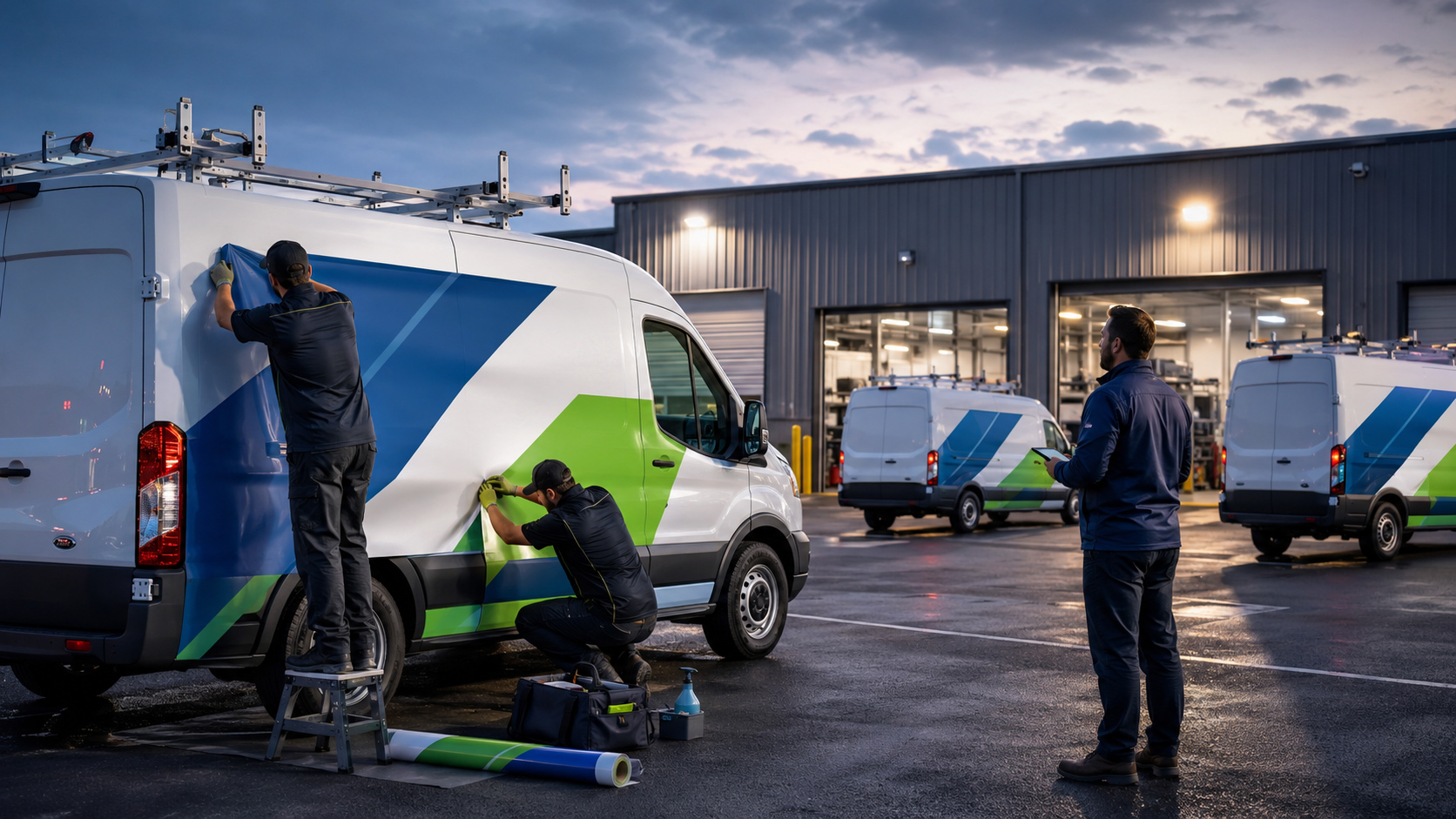
Vehicles may operate in different cities, regions, or branches. Some may only return to the yard after hours. Others may run daily routes and cannot sit idle during business hours. In some cases, installers need to work overnight, on weekends, or in waves by market.

That means vehicle wrap installation has to fit the fleet’s operating rhythm.

A good schedule answers practical questions upfront:

  • When can each vehicle come out of service?
  • Where will the installation happen?
  • Who controls vehicle access?
  • Who confirms the vehicle is clean and ready?
  • What happens if a vehicle misses its appointment?
  • Can installers complete the work at night?
  • Does the vehicle need removal, repair, or prep first?
  • Who approves the finished installation?

Without that coordination, vehicles get missed, drivers show up late, installers wait, and rollout timelines start to slip.

How Long Does Vehicle Wrap Installation Take?

The answer depends on the vehicle, the graphics coverage, and the condition of the asset.

A spot graphic may take only a few hours. A partial wrap may take longer. A full wrap can require much more time, especially if the vehicle needs cleaning, old vinyl removal, or surface prep. One recent fleet wrap timing guide notes that full wraps can require multi-day shop commitments per vehicle, while partial wraps and spot graphics may take less time depending on scope.

However, timing becomes harder to predict when vehicles are already working.

A clean vehicle with approved artwork and a confirmed installation window can move quickly. A dirty vehicle with damage, missing records, or schedule conflicts can slow everything down.

So instead of planning around the best-case scenario, fleet managers should plan around the real condition of the fleet.

Vehicle Wrap Installation Across Multiple Locations Needs One Standard

When a fleet spans multiple markets, consistency becomes harder to protect.

Different locations may use different installers. Local teams may interpret instructions differently. Vehicles may arrive in different condition. Some branches may follow the schedule closely, while others may need more coordination.

That can lead to inconsistent results.

One market may place graphics correctly. Another may miss a decal. A third may install the right artwork but skip required proof photos. Over time, the fleet starts to look close, but not quite consistent.

To prevent that, fleet graphics installation should follow one clear standard. That standard should define artwork, materials, placement, install expectations, photo proof, issue reporting, and final approval.

Then every market works from the same playbook.

Why Active Fleet Installations Need Proof Photos

Proof photos matter because they confirm that the work actually happened and that the vehicle matches the approved layout.

For active fleets, that visibility matters even more. Vehicles may leave the installation site and go straight back to work. If no one captures final photos, the brand team may not know whether the installation was completed correctly.

At minimum, proof photos should show:

  • Driver side
  • Passenger side
  • Front
  • Rear
  • Unit number
  • Any required DOT or compliance markings
  • Close-ups of important brand details
  • Any exceptions or damage

These photos give fleet, operations, and brand teams a shared record. They also help later if the vehicle needs repair, replacement graphics, removal, or rebranding.

How to Prepare Active Vehicles for Vehicle Wrap Installation

Fleet managers can make the process smoother by preparing vehicles before installation day.

Start by confirming which vehicles need graphics and where they are located. Then check each vehicle’s condition, schedule access, and confirm who will release the vehicle to the installer.

Before installation, teams should also:

  • Clean the vehicle
  • Remove personal items or equipment that blocks access
  • Report visible damage
  • Confirm old graphics or decals that need removal
  • Check whether body work needs to happen first
  • Confirm the approved artwork version
  • Make sure the driver or branch knows the schedule
  • Build in time for missed appointments or delays

This work may feel basic, but it prevents most of the avoidable problems that slow down fleet installations.

What Goes Wrong Without Installation Coordination

Without strong coordination, active fleet branding gets messy quickly.

Vehicles may show up dirty. Drivers may not know they need to report to the install site. Installers may not have access to the right vehicle. A branch may send the wrong asset. Old graphics may take longer to remove than expected. Damage may stop the installation. Proof photos may never get captured.

Then the rollout becomes reactive.

Instead of moving through a clean schedule, teams start chasing updates, rescheduling missed vehicles, fixing inconsistencies, and trying to figure out what actually happened.

That is when a graphics program starts to drain time from fleet, operations, marketing, and procurement.

Why Vehicle Wrap Installation Is Really an Operations Issue

Fleet branding may start with marketing, but installation touches operations.

The brand team cares about consistency. Fleet cares about downtime. Drivers care about availability. Procurement cares about cost. Local managers care about schedules. The graphics provider needs access, clean surfaces, approved artwork, and clear instructions.

Because of that, the best fleet graphics programs do not treat installation as an afterthought. They plan it as part of the operation.

That means coordinating people, vehicles, locations, timing, materials, artwork, proof, and exceptions from the beginning.

How Signature Helps With Vehicle Wrap Installation for Active Fleets

Signature Graphics helps brands and fleet teams manage the practical side of vehicle wrap installation when vehicles are already in service.

That includes coordinating schedules, adapting graphics across vehicle types, managing installation details, tracking progress, and documenting completed work. When vehicles operate across multiple locations or need after-hours installation, that coordination becomes even more important.

The goal is simple: keep the rollout moving, protect brand consistency, and help the fleet get back on the road with less confusion.

FAQs About Vehicle Wrap Installation for Active Fleets

How do you schedule vehicle wrap installation for a working fleet?

Start by identifying where each vehicle is located, when it can come out of service, and who controls access. Then schedule installation around routes, maintenance windows, branch operations, and driver availability.

Can vehicle wrap installation happen at night?

Yes, in many cases, installers can complete work after hours if the location, lighting, vehicle access, and schedule support it. Night or weekend installation can help reduce downtime for active fleets.

Do vehicles need to be cleaned before wrap installation?

Yes. Vehicles should arrive clean and ready for installation. Dirt, road grime, wax, oil, salt, or residue can interfere with adhesion and slow down the process.

Can damaged vehicles still get graphics installed?

Sometimes, but the damage matters. Dents, scratches, rust, peeling paint, fresh paint, or damaged panels may need repair before graphics can be installed correctly.

What causes fleet graphics installation delays?

Common delays include dirty vehicles, missed appointments, damaged panels, old graphics removal, wrong vehicle information, unavailable drivers, weather, material issues, and lack of proof or approval.

Why does installation coordination matter for fleet graphics?

Installation coordination keeps vehicles, installers, artwork, materials, schedules, and proof photos aligned. Without it, teams lose time, miss vehicles, and risk inconsistent branding.

Posted in NewsTagged , , , , , , , Leave a Comment on Why Installation Verification Matters for Fleet Branding Programs

Why Installation Verification Matters for Fleet Branding Programs

When it comes to fleet branding, the installation is the moment everything becomes real.

The design has been approved. The graphics have been produced. The vehicles are scheduled. Now the brand needs to show up correctly on every asset, in every location, with every detail in place.

That is why installation verification matters.

What Is Installation Verification?

Installation verification is the process of confirming that graphics have been applied correctly after installation is complete. This can include photo documentation, location tracking, completion status, quality checks, and reporting.

For a single vehicle, that may seem simple. For a national fleet, it becomes essential.

When dozens, hundreds, or thousands of vehicles are being branded across multiple locations, verification gives teams the confidence that each install was completed and that the finished result meets brand standards.

It Protects Brand Consistency

Your fleet is often one of the most visible parts of your brand. Every vehicle on the road represents your company, your standards, and your customer experience.

If graphics are installed incorrectly, the issue can be noticed quickly. A logo placed too low, a color that does not match, a missing decal, or an inconsistent layout can make the fleet look disconnected.

Installation verification helps catch those issues. By documenting completed installs, teams can confirm that each vehicle matches the approved design and that the brand is being represented consistently.

It Creates Accountability Across Locations

Fleet graphics programs often involve multiple stakeholders. Marketing teams care about the brand. Fleet managers care about vehicle availability. Operations teams care about scheduling. Installers care about execution.

Verification gives everyone a shared record of what happened.

Instead of relying on scattered updates or verbal confirmation, photo proof and reporting create a clear source of truth. Teams can see what was completed, when it was completed, and whether any follow-up is needed.

It Helps Keep Programs on Schedule

Large branding programs move quickly. If one location falls behind or a vehicle is missed, it can affect the rest of the rollout.

Installation verification makes it easier to track progress in real time. Completed vehicles can be marked as finished. Pending installs can be identified. Issues can be addressed before they create larger delays.

That visibility helps teams stay organized and keeps the program moving forward.

It Supports Long-Term Fleet Management

Verification is also valuable after the initial install. As vehicles are added, removed, repaired, or replaced, documentation helps teams understand the branding history of each asset.

This can make future maintenance easier. If a vehicle needs replacement graphics, teams can reference prior installation records and ensure the new graphics match the rest of the fleet.

Conclusion

Fleet branding is not just about getting graphics onto vehicles. It is about getting them installed correctly, consistently, and with proof that the work was completed.

Installation verification gives brands the confidence that their fleet is showing up the right way. For large programs, that confidence is not a nice-to-have. It is a critical part of protecting brand quality at scale.

Want a simple way to review your next fleet graphics rollout? Download our Fleet Graphics Installation Verification Checklist to help keep every install consistent, documented, and aligned with approved brand standards.