
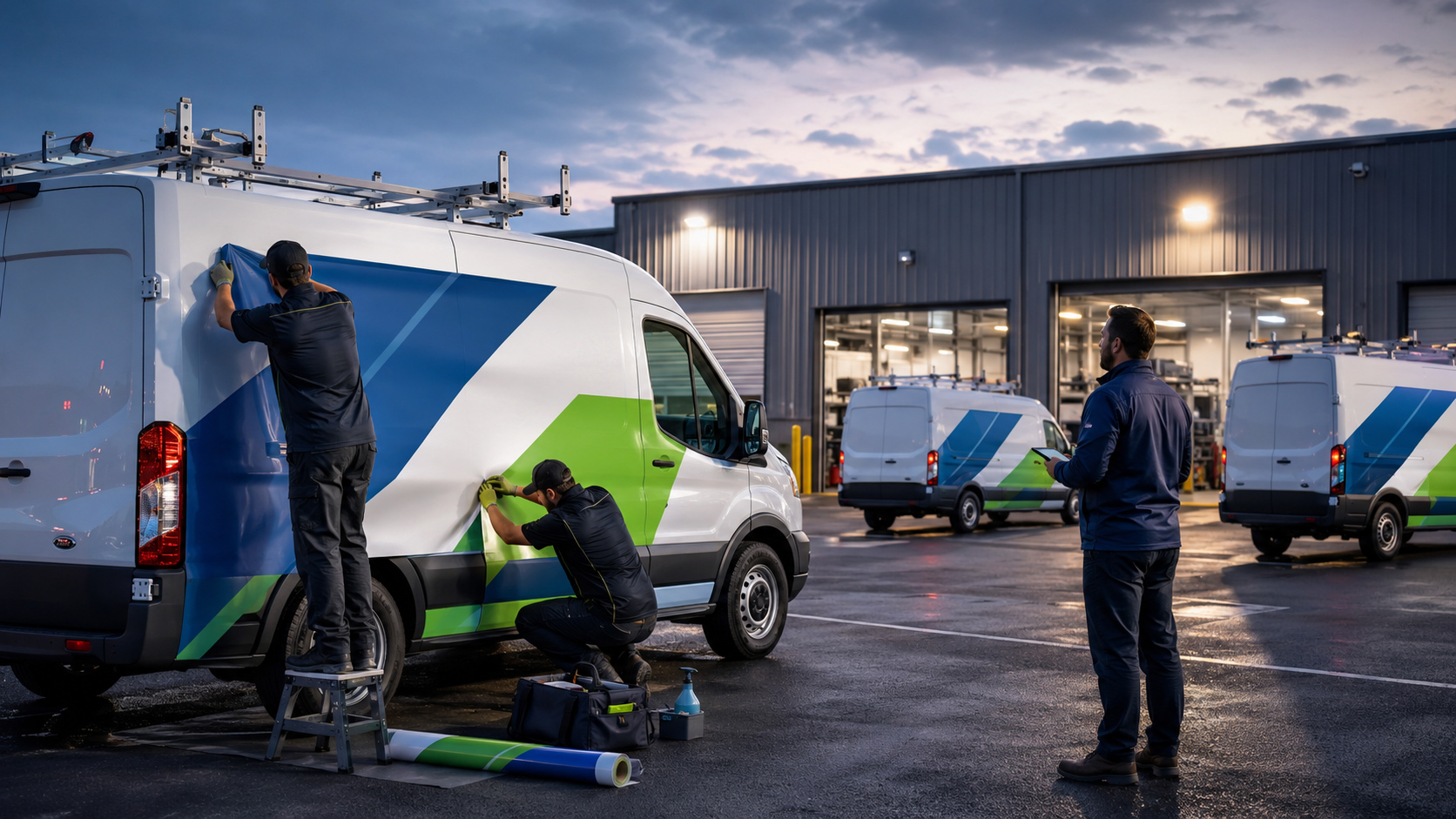
Branding a new vehicle before it enters service is one thing. Planning vehicle wrap installation for a vehicle that already works every day is something else entirely.
Once a fleet is active, every vehicle has a job to do. It may run routes, visit customers, carry equipment, make deliveries, or support field teams. So when the time comes for vehicle wrap installation, fleet managers cannot just pull vehicles off the road whenever it is convenient for the graphics team.
They need a plan that works around the business.
That is where fleet graphics programs often get harder than expected. Vehicles may be dirty, damaged, scattered across markets, booked into service schedules, or only available at night. Meanwhile, the brand team still needs the graphics to look right, match standards, and show up consistently across the fleet.
Good installation coordination closes that gap.
Why Vehicle Wrap Installation Gets Harder Once Vehicles Are in Service
A parked vehicle gives installers time, access, and control. An active fleet does not.
Once vehicles enter service, the installation plan has to work around drivers, routes, maintenance schedules, branch locations, customer commitments, and vehicle availability. As a result, the graphics rollout becomes more than a production job. It becomes an operations job.
That matters because downtime has real consequences. Fleet graphics providers and industry sources often point to vehicle downtime as one of the biggest concerns in fleet graphics programs, since every hour off the road can affect revenue and operations.
So the question is not just, “Can we install the graphics?”
The better question is, “Can we install the graphics without creating problems for the fleet?”
The First Challenge: Vehicles Are Not Always Ready for Graphics
Before vehicle wrap installation begins, the vehicle has to be ready for graphics.
That sounds simple, but active fleet vehicles pick up real-world wear quickly. They may arrive with road grime, salt, oil residue, dents, scratches, peeling decals, or old graphics that need removal. In some cases, the vehicle may need body work before new graphics can go on.
If no one catches those issues early, the installation day can fall apart.
For example, a dirty vehicle may need additional cleaning. A damaged panel may need repair before graphics will adhere correctly. Old vinyl may take longer to remove than expected. In addition, a vehicle with fresh paint may need cure time before new graphics can be installed.
That is why pre-install inspection matters. Fleet prep guidance commonly recommends inspecting vehicles before installation day and looking for surface damage or imperfections before the wrap process begins.
Vehicle Wrap Installation Needs Accurate Vehicle Information
Next, the installation team needs accurate vehicle data.
For an active fleet, “van” is not enough information. A Ford Transit, Ram ProMaster, Chevrolet Express, box truck, trailer, pickup, or service vehicle may each need a different layout. Even vehicles in the same category can have different wheelbases, roof heights, door configurations, windows, handles, sensors, racks, liftgates, or aftermarket equipment.
Because of that, fleet managers should confirm:
- Vehicle make, model, and year
- Unit number or asset ID
- VIN
- Location
- Body style
- Roof height and wheelbase
- Existing graphics
- Damage or repair needs
- Upfitting or equipment that affects placement
- Availability window
Without that information, teams may print the wrong layout, schedule the wrong installer, or discover problems only after the vehicle arrives.
Why Fleet Graphics Installation Becomes a Scheduling Problem
For large fleets, scheduling creates one of the biggest challenges.
Vehicles may operate in different cities, regions, or branches. Some may only return to the yard after hours. Others may run daily routes and cannot sit idle during business hours. In some cases, installers need to work overnight, on weekends, or in waves by market.
That means vehicle wrap installation has to fit the fleet’s operating rhythm.
A good schedule answers practical questions upfront:
- When can each vehicle come out of service?
- Where will the installation happen?
- Who controls vehicle access?
- Who confirms the vehicle is clean and ready?
- What happens if a vehicle misses its appointment?
- Can installers complete the work at night?
- Does the vehicle need removal, repair, or prep first?
- Who approves the finished installation?
Without that coordination, vehicles get missed, drivers show up late, installers wait, and rollout timelines start to slip.
How Long Does Vehicle Wrap Installation Take?
The answer depends on the vehicle, the graphics coverage, and the condition of the asset.
A spot graphic may take only a few hours. A partial wrap may take longer. A full wrap can require much more time, especially if the vehicle needs cleaning, old vinyl removal, or surface prep. One recent fleet wrap timing guide notes that full wraps can require multi-day shop commitments per vehicle, while partial wraps and spot graphics may take less time depending on scope.
However, timing becomes harder to predict when vehicles are already working.
A clean vehicle with approved artwork and a confirmed installation window can move quickly. A dirty vehicle with damage, missing records, or schedule conflicts can slow everything down.
So instead of planning around the best-case scenario, fleet managers should plan around the real condition of the fleet.
Vehicle Wrap Installation Across Multiple Locations Needs One Standard
When a fleet spans multiple markets, consistency becomes harder to protect.
Different locations may use different installers. Local teams may interpret instructions differently. Vehicles may arrive in different condition. Some branches may follow the schedule closely, while others may need more coordination.
That can lead to inconsistent results.
One market may place graphics correctly. Another may miss a decal. A third may install the right artwork but skip required proof photos. Over time, the fleet starts to look close, but not quite consistent.
To prevent that, fleet graphics installation should follow one clear standard. That standard should define artwork, materials, placement, install expectations, photo proof, issue reporting, and final approval.
Then every market works from the same playbook.
Why Active Fleet Installations Need Proof Photos
Proof photos matter because they confirm that the work actually happened and that the vehicle matches the approved layout.
For active fleets, that visibility matters even more. Vehicles may leave the installation site and go straight back to work. If no one captures final photos, the brand team may not know whether the installation was completed correctly.
At minimum, proof photos should show:
- Driver side
- Passenger side
- Front
- Rear
- Unit number
- Any required DOT or compliance markings
- Close-ups of important brand details
- Any exceptions or damage
These photos give fleet, operations, and brand teams a shared record. They also help later if the vehicle needs repair, replacement graphics, removal, or rebranding.
How to Prepare Active Vehicles for Vehicle Wrap Installation
Fleet managers can make the process smoother by preparing vehicles before installation day.
Start by confirming which vehicles need graphics and where they are located. Then check each vehicle’s condition, schedule access, and confirm who will release the vehicle to the installer.
Before installation, teams should also:
- Clean the vehicle
- Remove personal items or equipment that blocks access
- Report visible damage
- Confirm old graphics or decals that need removal
- Check whether body work needs to happen first
- Confirm the approved artwork version
- Make sure the driver or branch knows the schedule
- Build in time for missed appointments or delays
This work may feel basic, but it prevents most of the avoidable problems that slow down fleet installations.
What Goes Wrong Without Installation Coordination
Without strong coordination, active fleet branding gets messy quickly.
Vehicles may show up dirty. Drivers may not know they need to report to the install site. Installers may not have access to the right vehicle. A branch may send the wrong asset. Old graphics may take longer to remove than expected. Damage may stop the installation. Proof photos may never get captured.
Then the rollout becomes reactive.
Instead of moving through a clean schedule, teams start chasing updates, rescheduling missed vehicles, fixing inconsistencies, and trying to figure out what actually happened.
That is when a graphics program starts to drain time from fleet, operations, marketing, and procurement.
Why Vehicle Wrap Installation Is Really an Operations Issue
Fleet branding may start with marketing, but installation touches operations.
The brand team cares about consistency. Fleet cares about downtime. Drivers care about availability. Procurement cares about cost. Local managers care about schedules. The graphics provider needs access, clean surfaces, approved artwork, and clear instructions.
Because of that, the best fleet graphics programs do not treat installation as an afterthought. They plan it as part of the operation.
That means coordinating people, vehicles, locations, timing, materials, artwork, proof, and exceptions from the beginning.
How Signature Helps With Vehicle Wrap Installation for Active Fleets
Signature Graphics helps brands and fleet teams manage the practical side of vehicle wrap installation when vehicles are already in service.
That includes coordinating schedules, adapting graphics across vehicle types, managing installation details, tracking progress, and documenting completed work. When vehicles operate across multiple locations or need after-hours installation, that coordination becomes even more important.
The goal is simple: keep the rollout moving, protect brand consistency, and help the fleet get back on the road with less confusion.
FAQs About Vehicle Wrap Installation for Active Fleets
How do you schedule vehicle wrap installation for a working fleet?
Start by identifying where each vehicle is located, when it can come out of service, and who controls access. Then schedule installation around routes, maintenance windows, branch operations, and driver availability.
Can vehicle wrap installation happen at night?
Yes, in many cases, installers can complete work after hours if the location, lighting, vehicle access, and schedule support it. Night or weekend installation can help reduce downtime for active fleets.
Do vehicles need to be cleaned before wrap installation?
Yes. Vehicles should arrive clean and ready for installation. Dirt, road grime, wax, oil, salt, or residue can interfere with adhesion and slow down the process.
Can damaged vehicles still get graphics installed?
Sometimes, but the damage matters. Dents, scratches, rust, peeling paint, fresh paint, or damaged panels may need repair before graphics can be installed correctly.
What causes fleet graphics installation delays?
Common delays include dirty vehicles, missed appointments, damaged panels, old graphics removal, wrong vehicle information, unavailable drivers, weather, material issues, and lack of proof or approval.
Why does installation coordination matter for fleet graphics?
Installation coordination keeps vehicles, installers, artwork, materials, schedules, and proof photos aligned. Without it, teams lose time, miss vehicles, and risk inconsistent branding.