
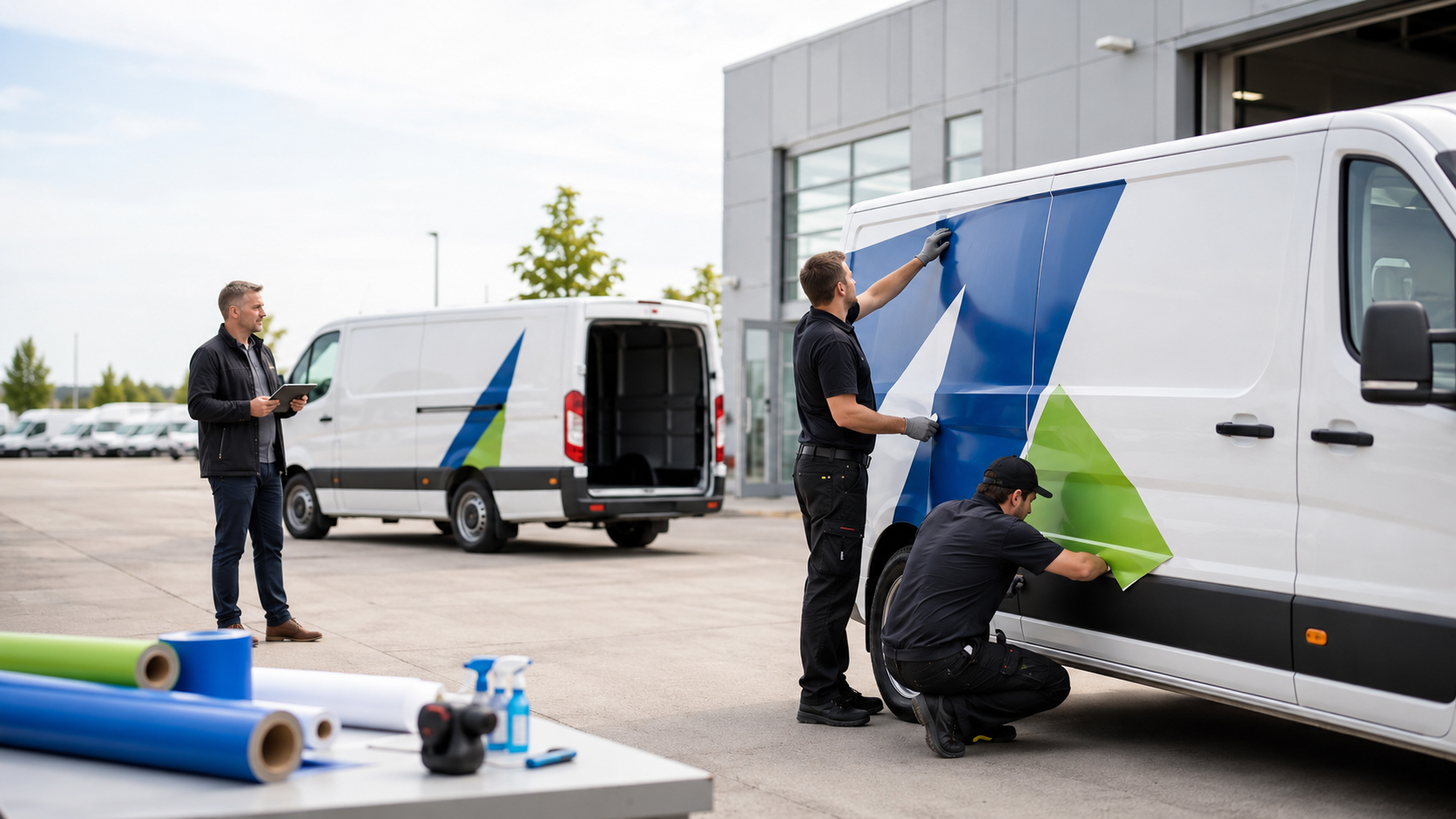
Not every company owns every vehicle it puts on the road.
Some fleets include leased vans. Others use rented vehicles for seasonal demand, special events, regional launches, acquisitions, overflow capacity, or short-term campaigns. As a result, brand teams and fleet managers often face the same problem: the vehicle needs to look branded, but the graphics cannot stay there forever.
That is where temporary vehicle graphics can help.
Instead of treating every fleet asset like a permanent wrap project, companies can use removable or changeable graphics to support short-term needs. They can brand a leased vehicle, promote a campaign, cover a seasonal route, or create consistency across a mixed fleet without committing to a permanent graphics solution.
However, temporary does not mean careless. The graphics still need to look professional, stay in place, come off cleanly, and protect the brand while the vehicle is in use.
Why Vehicle Graphics Matter for Modern Fleets
Fleet ownership has changed.
Many companies no longer rely only on vehicles they own outright. Instead, they may lease vehicles, rent units during busy seasons, use temporary assets after an acquisition, or add vehicles quickly when demand spikes.
That flexibility helps operations move faster. However, it also creates a branding problem.
A rented white van, an unmarked leased box truck, or a mismatched temporary vehicle can weaken the brand experience. Customers may not recognize the company. Drivers may arrive in vehicles that look unfinished. Local teams may improvise with magnets, decals, or inconsistent graphics.
Temporary vehicle graphics give companies a way to solve that problem without overcommitting.
When Temporary Graphics Make Sense
Temporary graphics work best when the vehicle has a limited purpose, limited ownership window, or limited branding need.
For example, companies may use temporary vehicle graphics for:
- Leased fleet vehicles
- Rental vans or trucks
- Seasonal delivery demand
- Short-term service routes
- Event vehicles
- Pilot programs
- Regional launches
- Temporary acquisitions
- Franchise or branch transitions
- Campaign-specific promotions
- Vehicles waiting for a permanent rebrand
- Overflow units during peak demand
In each case, the company needs the vehicle to look credible and brand-right while it is on the road. At the same time, the company may need to remove the graphics later without damaging the vehicle or violating lease terms.
Temporary vs. Permanent Wraps
Permanent fleet graphics work well when the company owns the vehicle, plans to keep it in service, and wants long-term brand consistency.
Temporary vehicle graphics solve a different problem.
They help companies brand vehicles when the timeline, ownership, or business purpose may change. For that reason, they usually focus on flexibility, clean removal, and efficient installation.
A permanent wrap may make sense for a core fleet vehicle that will represent the brand for years. However, a temporary graphic may work better for a leased van, rental truck, seasonal route, or short-term campaign.
The right choice depends on how long the vehicle will stay in service, who owns it, what the lease allows, and how visible the vehicle will be to customers.
Temporary Wraps for Leased Vehicles
Leased vehicles create one of the most common use cases for temporary graphics.
A company may need the vehicle to represent the brand every day, but the lease may restrict permanent changes. Before adding graphics, fleet managers should review the lease agreement and confirm what types of non-permanent branding the lessor allows.
In many cases, removable vehicle graphics can give companies a practical option. 3M specifically notes that temporary graphic wraps can help companies brand leased trucks and vans with removable wrap films.
Even so, teams should not assume every leased vehicle works the same way. Before installation, they should confirm the lease terms, vehicle condition, paint quality, material choice, removal plan, and return requirements.
Graphics for Rental Vehicles
Rental vehicles create another challenge.
A company may need extra capacity for a few days, weeks, or months. However, a rental vehicle often arrives with no branding at all. That can create problems when drivers visit customer sites, make deliveries, or support a public event.
Temporary vehicle graphics can help rental assets look more professional and consistent with the rest of the fleet.
Still, rental vehicles require extra care. Companies should confirm whether the rental agreement allows graphics. They should also choose materials designed for short-term use and plan removal before the vehicle returns.
The goal is simple: make the rental vehicle support the brand while it works, then return it cleanly when the job ends.
Promotional Wraps for Seasonal Campaigns
Seasonal demand often forces companies to add vehicles quickly.
Retail, food service, delivery, logistics, home services, healthcare, utilities, and event-driven businesses may need more vehicles during peak periods. However, those vehicles may not stay in the fleet long enough to justify permanent graphics.
In that case, temporary vehicle graphics can support the season without creating long-term commitments.
For example, a company may use short-term graphics for a holiday campaign, summer service push, product launch, local event, or limited-time offer. 3M describes changeable graphic films as a flexible option for short-term needs, including seasonal campaigns and rentals.
That flexibility matters because the campaign can end, the graphics can come off, and the base vehicle can move on to its next use.
What to Consider Before Using Temporary Vehicle Graphics
Temporary graphics still need planning.
Before installation, fleet managers and brand teams should answer a few practical questions:
- Who owns the vehicle?
- What does the lease or rental agreement allow?
- How long will the graphics stay on the vehicle?
- What condition is the paint in?
- Does the vehicle need cleaning, repair, or prep first?
- Will the graphics need to withstand weather, washing, or road grime?
- Who will remove the graphics?
- Where will removal happen?
- What proof does the company need before and after installation?
- Does the design need to match permanent fleet graphics?
These questions prevent temporary branding from becoming a permanent headache.
Why Material Choice Matters for Temporary Vehicle Graphics
Material choice matters because temporary graphics need to do two things well: stay on the vehicle during use and come off when the job ends.
A short-term graphic still has to handle road conditions, washing, sun exposure, weather, and daily use. At the same time, the material should support clean removal based on the vehicle surface, timing, and application.
That is why companies should not treat temporary graphics like basic stickers. The material, adhesive, laminate, surface prep, and removal plan all affect the final result.
If the team chooses the wrong material, the graphics may fail early, leave residue, damage the surface, or take too long to remove.
Temporary Vehicle Graphics Still Need Brand Standards
Temporary should not mean inconsistent.
Even when graphics stay on a vehicle for a short time, they still represent the company in the field. Customers do not know whether a van is leased, rented, temporary, or permanent. They only see the brand.
Because of that, temporary vehicle graphics should still follow brand standards.
That includes logo placement, colors, message hierarchy, phone numbers, URLs, safety markings, and any regional or compliance requirements. If the temporary vehicle works beside permanent fleet vehicles, the design should feel intentional, not improvised.
Temporary Vehicle Graphics Can Help During Rebrands and Acquisitions
Temporary graphics can also help during messy transition periods.
After a merger, acquisition, or rebrand, companies may not have every vehicle ready for a permanent update. Some vehicles may retire soon. Others may belong to a lease program. Some may need body work before graphics installation. Others may operate in markets that need a faster brand change.
In those situations, temporary vehicle graphics can bridge the gap.
They can cover old marks, introduce the new brand, or create a more consistent fleet appearance while the company works through the larger rollout.
That does not replace a full rebrand plan. However, it can reduce confusion while the permanent program catches up.
Temporary Vehicle Graphics Need a Removal Plan
Many companies plan the installation but forget the removal.
That creates problems later.
Before temporary graphics go on the vehicle, the team should know when they need to come off, who will remove them, where removal will happen, and how the vehicle should look afterward.
This matters most for leased and rented vehicles. If the vehicle has to return in a certain condition, removal becomes part of the project, not an afterthought.
A strong temporary graphics plan includes:
- Installation date
- Expected removal date
- Material used
- Vehicle condition before install
- Proof photos after install
- Removal location
- Removal responsibility
- Final condition photos
That record helps protect the brand, the vehicle, and the team managing the asset.
How Signature Helps With Temporary Vehicle Graphics
Signature Graphics helps brands and fleet teams manage temporary vehicle graphics when ownership, timing, or vehicle use does not fit a permanent wrap.
That may include leased vehicles, rental assets, short-term campaigns, seasonal fleet needs, acquisition transitions, or vehicles waiting for a larger rebrand rollout.
Signature helps teams plan the graphics, match the brand standards, coordinate installation, document completion, and think through removal from the beginning.
The goal is simple: make temporary vehicles look intentional while they represent the brand, then keep the process organized when those graphics need to change or come off.
FAQs About Temporary Vehicle Graphics
What are temporary vehicle graphics?
Temporary vehicle graphics are removable or changeable graphics designed for short-term use on cars, vans, trucks, trailers, or other fleet assets. Companies often use them for leased vehicles, rental assets, seasonal campaigns, events, or short-term branding needs.
Can you put temporary vehicle graphics on a leased vehicle?
Often, yes, but the fleet manager should check the lease agreement first. The company should confirm what the lessor allows, choose the right removable material, and plan removal before the vehicle returns.
Can you brand a rental vehicle?
Sometimes. It depends on the rental agreement and the graphics material. Companies should confirm approval before installation and choose graphics that support clean removal.
How long do temporary vehicle graphics last?
The timeline depends on the material, vehicle surface, weather exposure, cleaning, and campaign length. Some temporary or changeable films can support short-term use, while others may last longer depending on the application. 3M notes that some changeable graphic films can have expected performance life up to two years, though companies often use them for shorter periods.
Do temporary vehicle graphics damage paint?
The right material and proper installation/removal process can reduce risk. However, paint condition matters. Older paint, poor repairs, rust, peeling clear coat, or previous damage can increase the chance of problems during removal.
Are temporary vehicle graphics better than magnets?
It depends on the vehicle, timeline, brand standards, and use case. Magnets may work for very simple short-term needs, but removable graphics usually look more integrated and professional when the vehicle needs to represent the brand consistently.