
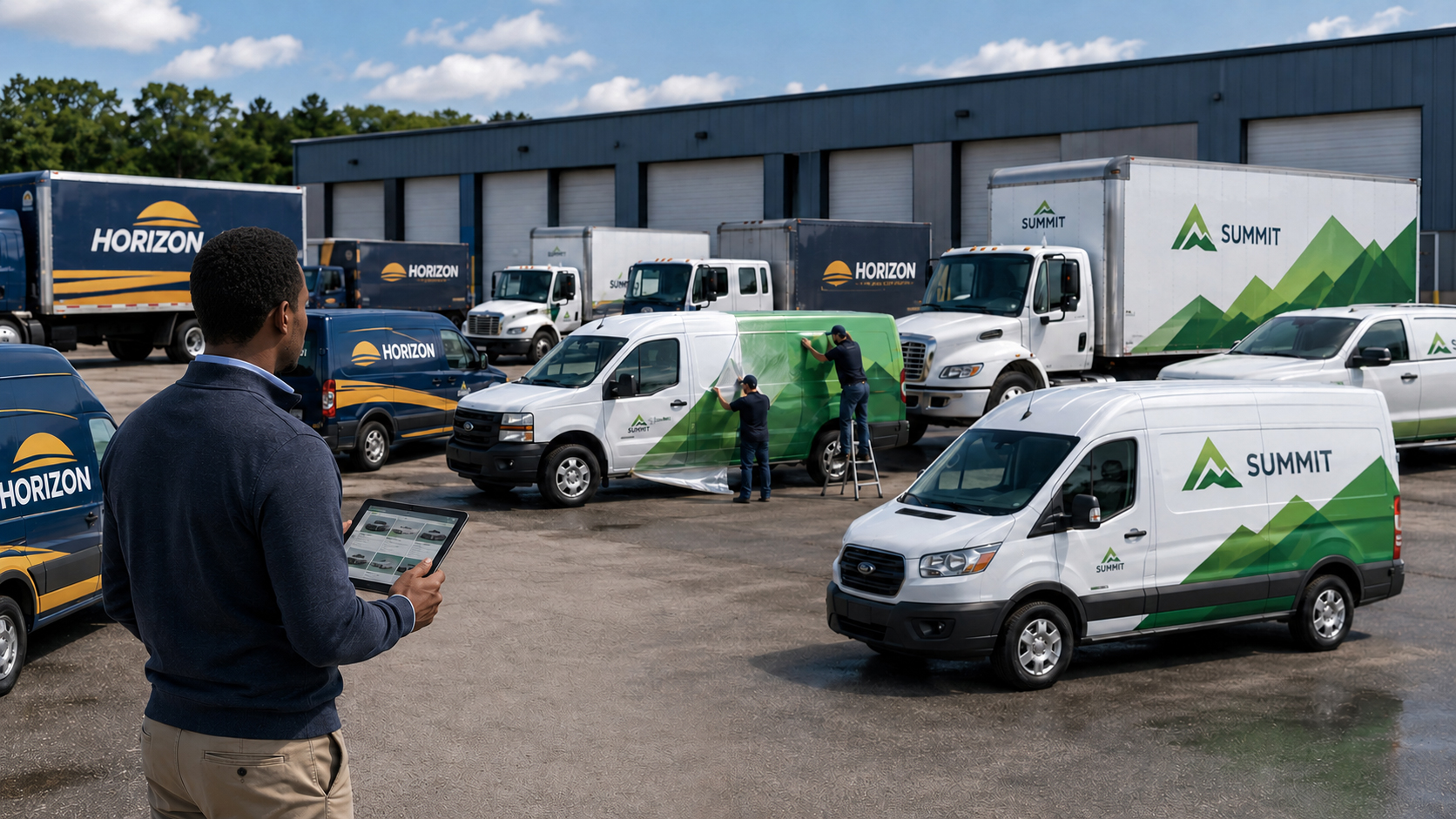
When companies go through rebranding after merger or acquisition, the brand conversation usually starts in the boardroom.
What name will we use? Which logo stays? What changes for customers? How do we explain the new company to the market?
Those questions matter. However, once the strategy is approved, the real work begins. The new brand has to show up everywhere people see the company. That includes websites, sales materials, uniforms, buildings, signage, offices, and one of the most visible assets in the business: the fleet.
For companies with vehicles on the road, rebranding after a merger can get complicated fast. A fleet may include different vehicle types, old logos, local phone numbers, outdated graphics, acquired assets, regional vendors, missing records, and vehicles spread across multiple markets.
If no one plans for that early, the fleet can become one of the most visible places where the rebrand falls apart.
Why Rebranding After Merger Gets Complicated for Fleet Branding
A merger or acquisition rarely creates a clean starting point.
Instead, it usually brings together different companies, different operating habits, and different brand systems. One company may have newer graphics. Another may have older decals that local teams ordered years ago. Some vehicles may follow brand standards closely. Others may carry branch-specific messages, phone numbers, service lists, or legacy marks.
As a result, the fleet becomes a moving inventory of brand history.
That creates a real challenge for brand owners, fleet managers, operations teams, and private equity-backed companies. Everyone wants the market to see one stronger company, but the assets on the road may still tell a different story.
Why Rebranding After Merger Starts With Unknown Fleet Assets
Most fleet rebranding problems start with a simple issue: the company does not know exactly what it has.
After an acquisition, the fleet list may not match reality. Some vehicles may sit at branch locations. Others may work in the field every day. Some may have changed assignments, moved markets, or gone through repairs without anyone updating the records.
Before a company can rebrand the fleet, it needs to answer basic questions:
- How many vehicles need new graphics?
- Where are they located?
- What type of vehicles are they?
- What graphics are currently on them?
- Which vehicles should be updated first?
- Which vehicles will leave the fleet soon?
- Which assets need removal, replacement, or temporary branding?
Without that information, teams start making assumptions. Then timelines slip, budgets change, and vehicles keep showing up in the market with the wrong brand.
Mixed Fleets Create Mixed Brand Impressions
Acquisitions often create mixed fleets.
One company may operate vans. Another may use box trucks, trailers, pickups, service vehicles, specialty equipment, or leased assets. Some vehicles may have full wraps. Others may only have decals, magnets, reflective markings, or door graphics.
That mix makes rebranding harder because one design rarely works across every asset.
A layout that looks good on a box truck may not fit a service van. A logo that works on a flat trailer may not work across windows, handles, door seams, sensors, fuel doors, or body curves. In addition, older vehicles may have damage, faded paint, or existing graphics that need removal before new branding can go on.
So, even if the new brand standards look clean in a presentation, the fleet still needs practical adaptation.
Old Brand Marks Stay Visible Longer Than People Expect
During a merger or acquisition, companies often underestimate how long old branding can stay in the field.
A vehicle may miss the first rollout window. A branch may delay installation because it needs the vehicle for daily work. A local vendor may only update part of the graphics. A damaged vehicle may sit at a body shop. A leased unit may need a different approach.
Meanwhile, customers keep seeing the old brand.
That creates confusion. It can make the acquisition look incomplete, especially when customers see old logos in one market and new graphics in another. For private equity-backed companies building a stronger platform brand, that inconsistency can weaken the message they are trying to send.
Local Vendors Can Create Inconsistent Results
After an acquisition, local teams may already have their own vendor relationships. That can help with speed, but it can also create consistency problems.
One vendor may use different materials. Another may interpret the artwork differently. A third may install the graphics without the same proofing process. Over time, the fleet starts to look close enough in some places and noticeably different in others.
That is where brand control breaks down.
A national rebrand needs clear standards for materials, color, placement, installation, proof photos, and repair. Otherwise, local execution can turn one approved brand into several slightly different versions.
Outdated Specs Slow Everything Down
A rebrand after a merger also exposes old or incomplete specifications.
Teams may not have current vehicle templates. They may not know which material was used on older graphics. They may not have production files for acquired vehicles. They may not know which assets need reflective markings, DOT numbers, unit numbers, or local compliance decals.
As a result, people waste time hunting for files, recreating layouts, checking measurements, or correcting mistakes after installation.
That slows down the rollout and increases the risk of rework.
Timelines Get Messy When Vehicles Stay in Service
Fleet rebranding does not happen in a vacuum. Vehicles still need to work.
That means every installation competes with routes, service calls, delivery schedules, driver availability, maintenance windows, and regional operations. In some cases, the best installation window may happen at night, over a weekend, or during scheduled downtime.
So, the rollout plan has to respect the operation.
If the plan only focuses on the brand launch date, it may miss the practical question that matters most to fleet teams: when can we actually get the vehicle?
How to Keep Fleet Rebranding From Failing
A successful fleet rebrand after a merger starts with visibility.
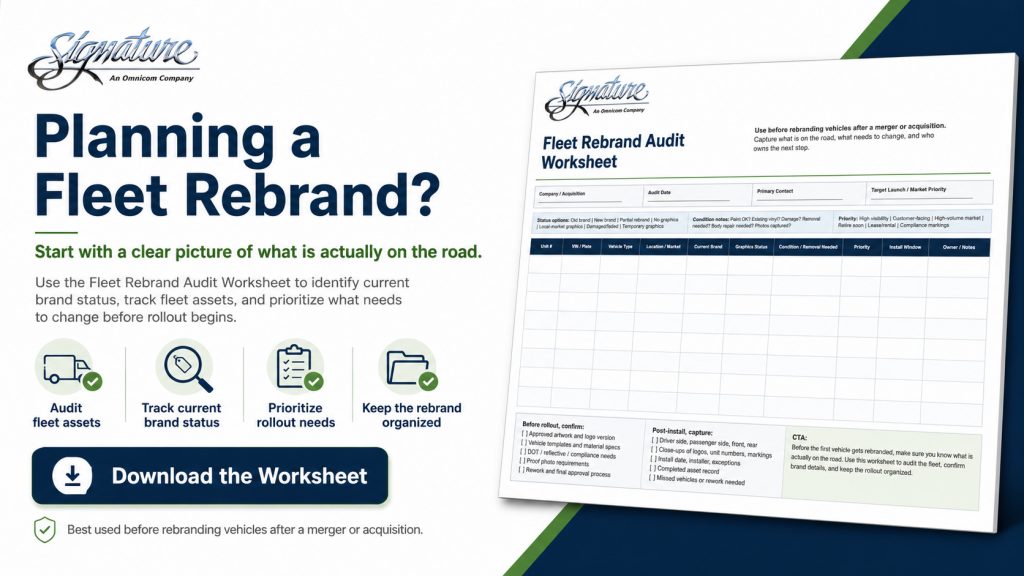
Before teams order graphics or schedule installations, they need a clear view of the fleet. That means building an asset list, confirming vehicle types, documenting current graphics, prioritizing markets, and deciding which vehicles need immediate updates.
From there, the company can build a more realistic rollout plan.
1. Start With a Fleet Audit
First, identify every branded asset that may need attention.
That includes:
- Vans
- Box trucks
- Trailers
- Pickups
- Service vehicles
- Specialty vehicles
- Leased vehicles
- Rental or temporary assets
- Equipment with visible branding
- Branch-specific vehicles
Then, document where each asset is, what brand it currently carries, and what condition it is in.
A clean fleet audit helps teams avoid one of the most common acquisition mistakes: launching the new brand before they know what needs to change.
2. Prioritize the Vehicles Customers See Most
Next, decide which vehicles matter most to the rollout.
Not every asset carries the same visibility or risk. Some vehicles operate in high-density markets. Others visit customer sites every day. Some represent the acquired brand in markets where the new company wants to make a strong impression quickly.
Prioritize vehicles based on visibility, customer impact, geography, and business need.
That way, the rollout does not treat every asset the same when some vehicles matter more to the brand story.
3. Create Clear Graphics Standards
Once the team understands the fleet, create clear graphics standards.
Those standards should include:
- Logo placement
- Color specifications
- Material requirements
- Reflective graphic requirements
- Unit number placement
- DOT or compliance markings
- Vehicle-specific layouts
- Installation standards
- Proof photo requirements
- Repair and replacement process
This gives internal teams, vendors, installers, and local branches the same playbook.
4. Plan Around Operations
Then, build the rollout around how the fleet actually works.
Ask practical questions early:
- When can vehicles come out of service?
- Can installation happen overnight?
- Which markets need mobile installation?
- Which assets need body repair or graphics removal first?
- Which vehicles will retire soon?
- Which leased vehicles need temporary or removable graphics?
- Who approves completed work?
This step matters because missed installation windows can derail the schedule quickly.
5. Track the Rollout in One Place
Finally, track the rebrand from one central source of truth.
A spreadsheet may work for a small fleet, but it can fall apart when the company has hundreds or thousands of vehicles across multiple markets.
Teams need to know which vehicles are planned, scheduled, in progress, completed, delayed, damaged, or missing information. They also need proof that each vehicle received the right graphics.
Without that visibility, the rollout becomes a series of emails, photo folders, local updates, and status calls.
Why This Matters for Private Equity-Backed Companies
Private equity-backed companies often use acquisitions to build scale. However, the market still needs to see that scale clearly.
For that reason, a fleet rebrand can help communicate that the company is bigger, more unified, and more capable than before. But when vehicles keep showing different names, different logos, and different messages, the market gets a mixed signal.
That matters to customers. It also matters to employees. And over time, it can affect future acquisitions because brand consistency helps the platform feel organized, disciplined, and ready to grow.
In other words, fleet branding is not just a design task. It is part of post-acquisition integration.
How Signature Helps With Rebranding After Merger Fleet Rollouts
Signature Graphics helps companies manage fleet rebrands when the work moves from strategy to execution.
That means helping teams identify what is on the road, adapt designs across vehicle types, produce consistent graphics, coordinate installation, and document completed work.
For companies going through a merger or acquisition, that kind of support matters. The brand may change in one meeting, but the fleet changes one asset at a time.
The goal is simple: help the new brand show up correctly, consistently, and visibly across every vehicle that represents the company.
Use the Fleet Rebrand Audit Worksheet to identify what you have, what needs to change, and which vehicles should move first.
FAQs About Fleet Rebranding After Merger
What is fleet rebranding?
Fleet rebranding means updating vehicle graphics, decals, wraps, markings, and related brand elements after a company changes its name, logo, ownership, or brand identity.
Why does fleet rebranding get harder after an acquisition?
Fleet rebranding gets harder after an acquisition because the company may inherit unknown assets, old graphics, inconsistent records, local vendors, mixed vehicle types, and different brand standards.
What should companies do before rebranding acquired fleet vehicles?
Companies should start with a fleet audit. They need to identify each vehicle, confirm its location, document its current graphics, check its condition, and decide whether it needs removal, replacement, temporary branding, or a full graphics update.
How Long Does Rebranding After Merger Take for Fleet Vehicles?
The timeline depends on the fleet size, vehicle locations, graphics complexity, installation access, material availability, and operational schedules. A small regional fleet may move quickly, while a national fleet may need a phased rollout.
Who should manage fleet branding during an acquisition?
Fleet branding usually needs input from marketing, fleet, operations, procurement, finance, and local branch teams. However, one central team should own the process so vendors, installers, and internal stakeholders work from the same plan.