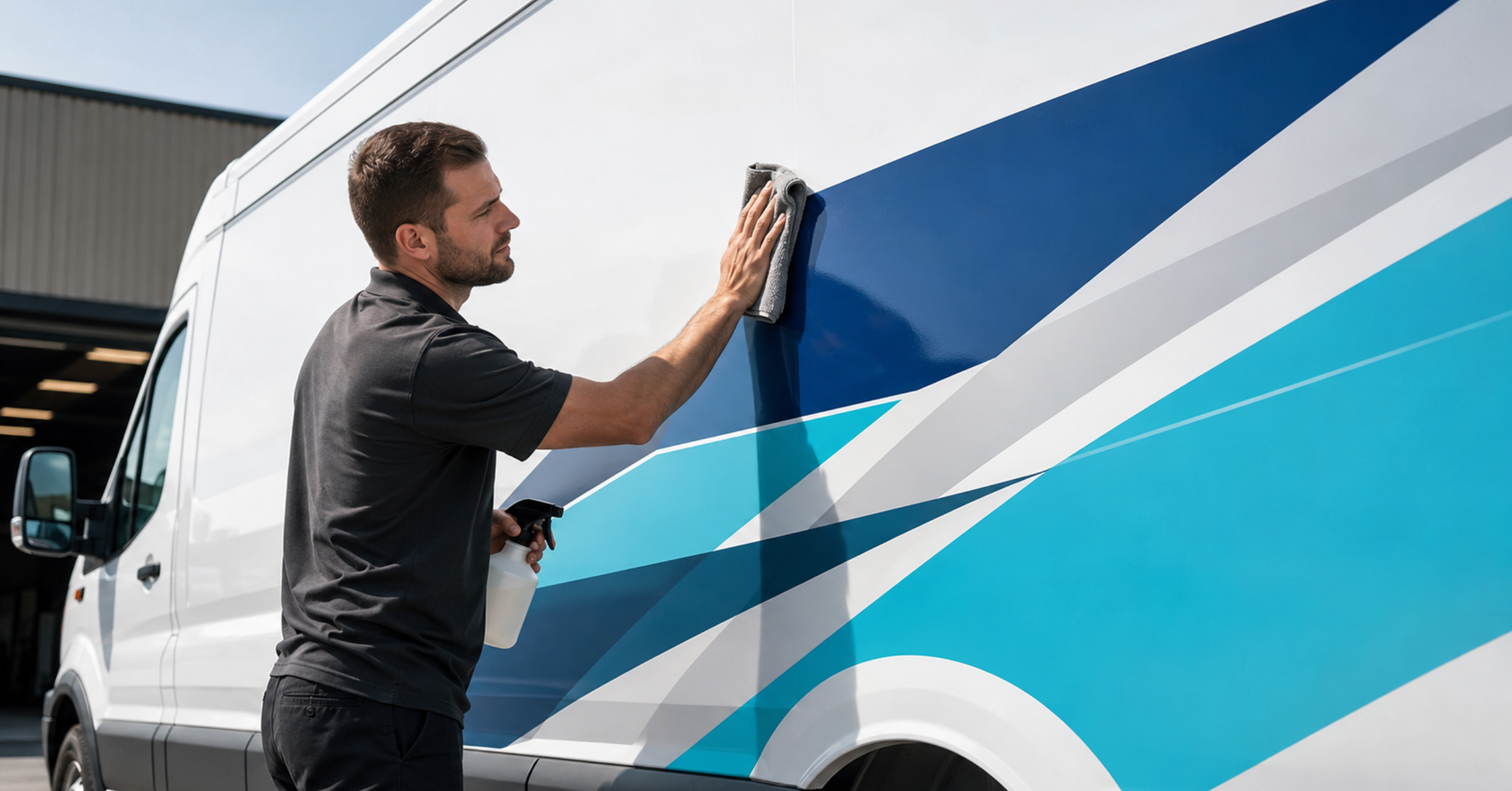
July is more than the heart of summer. For many businesses, it is also the perfect midpoint to pause, evaluate, and make sure their fleet is still working as hard as it should be.
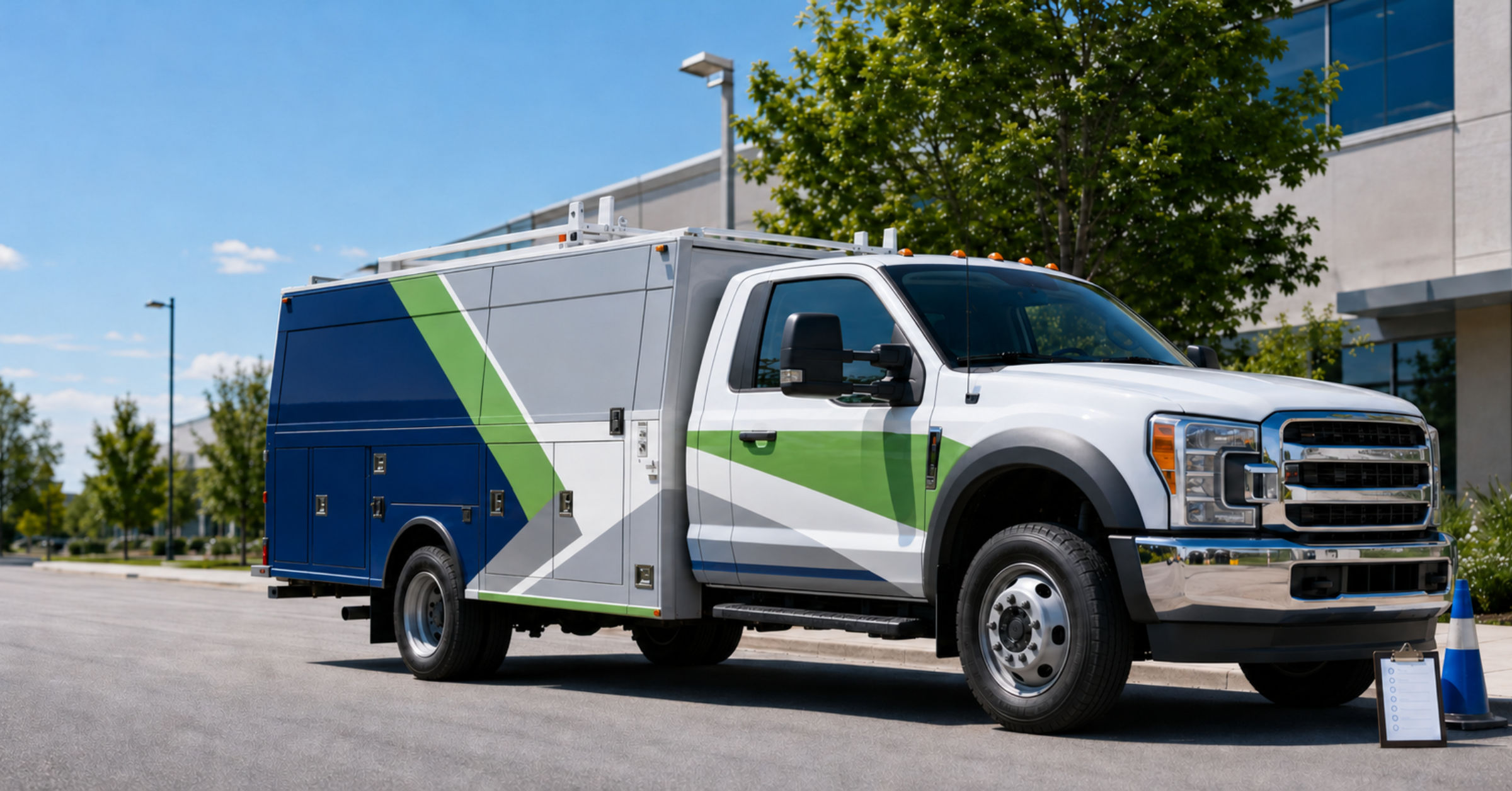
Your vehicles are constantly representing your brand on the road, at job sites, in parking lots, and in front of customers. But after months of weather exposure, highway miles, frequent washing, and everyday wear, even the strongest fleet graphics can benefit from a closer look.
A mid-year fleet graphics checkup can help you catch small issues before they become bigger problems, keep your brand looking consistent, and prepare your vehicles for the busy months ahead.
Why July Matters for Fleet Branding
Summer is one of the most active times of year for many industries. Service vehicles are on the move, delivery fleets are busier, franchise locations are supporting seasonal demand, and more customers are out and about.
That means your fleet has more opportunities to be seen.
But higher visibility also means your branding needs to look its best. Faded graphics, peeling decals, damaged panels, outdated information, or inconsistent vehicle branding can create the wrong impression. When your fleet is clean, consistent, and professionally branded, every mile becomes another opportunity to reinforce your company’s image.
July is a natural time to ask: Is our fleet still presenting our brand the way we want it to?
What to Look for During a Mid-Year Fleet Graphics Checkup
A fleet graphics checkup does not have to be complicated. The goal is to evaluate the condition, consistency, and accuracy of your branded assets so you can make updates before they impact your brand presence.
Here are a few key areas to review:
1. Graphic Wear and Damage
Start by looking for signs of normal wear. This may include peeling edges, scratches, fading, bubbling, lifting, or damage from road debris. Small issues may seem minor, but they can make a vehicle look neglected over time.
Routine inspections help protect your investment and allow you to repair or replace graphics before the damage spreads.
2. Brand Consistency Across Vehicles
For large fleets, consistency is everything. Every vehicle should look like it belongs to the same brand family, whether it is a van, box truck, trailer, semi-truck, or service vehicle.
Check for differences in logo placement, color, sizing, messaging, phone numbers, URLs, unit numbers, or compliance markings. Even slight inconsistencies can stand out when vehicles are seen side by side.
A consistent fleet builds trust, reinforces professionalism, and makes your brand easier to recognize.
3. Outdated Messaging or Contact Information
July is a great time to make sure your graphics still reflect your current business.
Ask yourself:
Does the phone number still route correctly? Is the website current? Are service offerings still accurate? Has your logo, tagline, or brand messaging changed? Are there outdated campaign graphics that need to be removed or refreshed?
Fleet graphics should support your current marketing strategy, not last year’s message.
4. Seasonal Campaign Opportunities
Summer is also a strong time to think about temporary or seasonal graphics. If your business runs summer promotions, supports special events, launches new services, or operates in high-traffic areas, your fleet can help amplify that message.
Temporary decals, promotional graphics, or changeable branding elements can help you make the most of seasonal visibility without committing to a full rebrand.
5. Installation and Replacement Planning
If you discover that vehicles need updated graphics, July gives you time to plan ahead. Coordinating production, shipping, installation, and vehicle availability is much easier when you are not waiting until the last minute.
This is especially important for national fleets or multi-location programs. Planning now can help reduce downtime, support smoother scheduling, and keep your fleet looking consistent across markets.
How Signature Graphics Helps Keep Fleets Looking Their Best
At Signature Graphics, we understand that fleet branding does not end after installation. Your vehicles continue to represent your brand every day, and maintaining that brand presence requires the right partner.
Our team supports businesses with end-to-end fleet graphics solutions, including design, production, inventory management, fulfillment, installation, removals, replacements, and ongoing brand support. Whether you are managing a small group of vehicles or a nationwide fleet, we help ensure your graphics are produced accurately, installed professionally, and maintained with consistency.
Through brandRESPONSE, our fleet branding management platform, clients can also gain visibility into ordering, inventory, project status, and branded assets across their fleet.
Make July Your Fleet Branding Reset
A mid-year fleet graphics checkup is a simple but valuable way to protect your brand, extend the life of your graphics, and make sure your vehicles are ready for the second half of the year.
This July, take a closer look at your fleet. A few proactive updates now can help your brand stay polished, professional, and visible all summer long.
Ready to refresh, repair, or review your fleet graphics? Connect with Signature Graphics to start planning your next fleet branding update.
When companies go through rebranding after merger or acquisition, the brand conversation usually starts in the boardroom.
What name will we use? Which logo stays? What changes for customers? How do we explain the new company to the market?
Those questions matter. However, once the strategy is approved, the real work begins. The new brand has to show up everywhere people see the company. That includes websites, sales materials, uniforms, buildings, signage, offices, and one of the most visible assets in the business: the fleet.
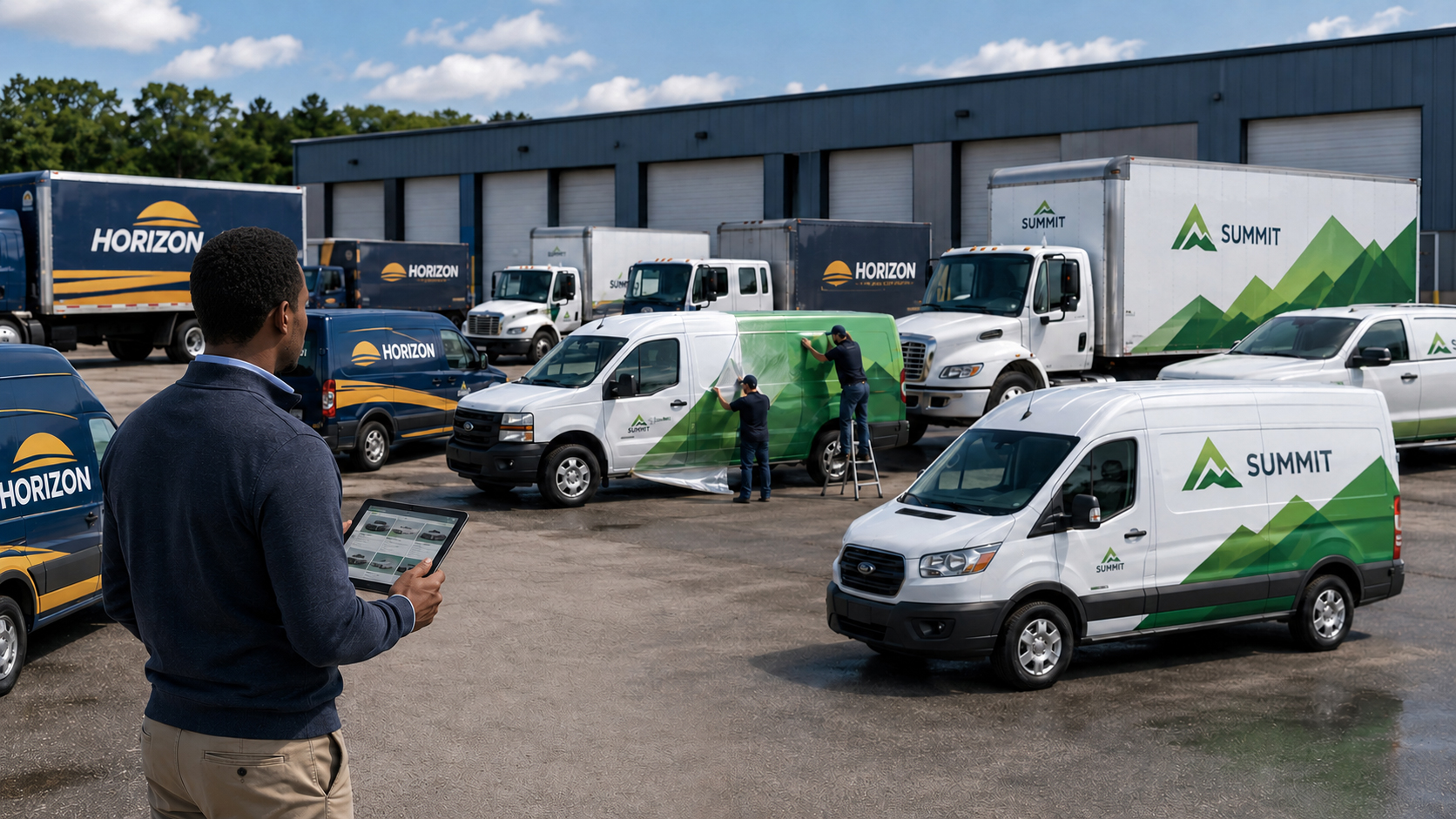
For companies with vehicles on the road, rebranding after a merger can get complicated fast. A fleet may include different vehicle types, old logos, local phone numbers, outdated graphics, acquired assets, regional vendors, missing records, and vehicles spread across multiple markets.
If no one plans for that early, the fleet can become one of the most visible places where the rebrand falls apart.
Why Rebranding After Merger Gets Complicated for Fleet Branding
A merger or acquisition rarely creates a clean starting point.
Instead, it usually brings together different companies, different operating habits, and different brand systems. One company may have newer graphics. Another may have older decals that local teams ordered years ago. Some vehicles may follow brand standards closely. Others may carry branch-specific messages, phone numbers, service lists, or legacy marks.
As a result, the fleet becomes a moving inventory of brand history.
That creates a real challenge for brand owners, fleet managers, operations teams, and private equity-backed companies. Everyone wants the market to see one stronger company, but the assets on the road may still tell a different story.
Why Rebranding After Merger Starts With Unknown Fleet Assets
Most fleet rebranding problems start with a simple issue: the company does not know exactly what it has.
After an acquisition, the fleet list may not match reality. Some vehicles may sit at branch locations. Others may work in the field every day. Some may have changed assignments, moved markets, or gone through repairs without anyone updating the records.
Before a company can rebrand the fleet, it needs to answer basic questions:
How many vehicles need new graphics?
Where are they located?
What type of vehicles are they?
What graphics are currently on them?
Which vehicles should be updated first?
Which vehicles will leave the fleet soon?
Which assets need removal, replacement, or temporary branding?
Without that information, teams start making assumptions. Then timelines slip, budgets change, and vehicles keep showing up in the market with the wrong brand.
Mixed Fleets Create Mixed Brand Impressions
Acquisitions often create mixed fleets.
One company may operate vans. Another may use box trucks, trailers, pickups, service vehicles, specialty equipment, or leased assets. Some vehicles may have full wraps. Others may only have decals, magnets, reflective markings, or door graphics.
That mix makes rebranding harder because one design rarely works across every asset.
A layout that looks good on a box truck may not fit a service van. A logo that works on a flat trailer may not work across windows, handles, door seams, sensors, fuel doors, or body curves. In addition, older vehicles may have damage, faded paint, or existing graphics that need removal before new branding can go on.
So, even if the new brand standards look clean in a presentation, the fleet still needs practical adaptation.
Old Brand Marks Stay Visible Longer Than People Expect
During a merger or acquisition, companies often underestimate how long old branding can stay in the field.
A vehicle may miss the first rollout window. A branch may delay installation because it needs the vehicle for daily work. A local vendor may only update part of the graphics. A damaged vehicle may sit at a body shop. A leased unit may need a different approach.
Meanwhile, customers keep seeing the old brand.
That creates confusion. It can make the acquisition look incomplete, especially when customers see old logos in one market and new graphics in another. For private equity-backed companies building a stronger platform brand, that inconsistency can weaken the message they are trying to send.
Local Vendors Can Create Inconsistent Results
After an acquisition, local teams may already have their own vendor relationships. That can help with speed, but it can also create consistency problems.
One vendor may use different materials. Another may interpret the artwork differently. A third may install the graphics without the same proofing process. Over time, the fleet starts to look close enough in some places and noticeably different in others.
That is where brand control breaks down.
A national rebrand needs clear standards for materials, color, placement, installation, proof photos, and repair. Otherwise, local execution can turn one approved brand into several slightly different versions.
Outdated Specs Slow Everything Down
A rebrand after a merger also exposes old or incomplete specifications.
Teams may not have current vehicle templates. They may not know which material was used on older graphics. They may not have production files for acquired vehicles. They may not know which assets need reflective markings, DOT numbers, unit numbers, or local compliance decals.
As a result, people waste time hunting for files, recreating layouts, checking measurements, or correcting mistakes after installation.
That slows down the rollout and increases the risk of rework.
Timelines Get Messy When Vehicles Stay in Service
Fleet rebranding does not happen in a vacuum. Vehicles still need to work.
That means every installation competes with routes, service calls, delivery schedules, driver availability, maintenance windows, and regional operations. In some cases, the best installation window may happen at night, over a weekend, or during scheduled downtime.
So, the rollout plan has to respect the operation.
If the plan only focuses on the brand launch date, it may miss the practical question that matters most to fleet teams: when can we actually get the vehicle?
How to Keep Fleet Rebranding From Failing
A successful fleet rebrand after a merger starts with visibility.
Before teams order graphics or schedule installations, they need a clear view of the fleet. That means building an asset list, confirming vehicle types, documenting current graphics, prioritizing markets, and deciding which vehicles need immediate updates.
From there, the company can build a more realistic rollout plan.
1. Start With a Fleet Audit
First, identify every branded asset that may need attention.
That includes:
Vans
Box trucks
Trailers
Pickups
Service vehicles
Specialty vehicles
Leased vehicles
Rental or temporary assets
Equipment with visible branding
Branch-specific vehicles
Then, document where each asset is, what brand it currently carries, and what condition it is in.
A clean fleet audit helps teams avoid one of the most common acquisition mistakes: launching the new brand before they know what needs to change.
2. Prioritize the Vehicles Customers See Most
Next, decide which vehicles matter most to the rollout.
Not every asset carries the same visibility or risk. Some vehicles operate in high-density markets. Others visit customer sites every day. Some represent the acquired brand in markets where the new company wants to make a strong impression quickly.
Prioritize vehicles based on visibility, customer impact, geography, and business need.
That way, the rollout does not treat every asset the same when some vehicles matter more to the brand story.
3. Create Clear Graphics Standards
Once the team understands the fleet, create clear graphics standards.
Those standards should include:
Logo placement
Color specifications
Material requirements
Reflective graphic requirements
Unit number placement
DOT or compliance markings
Vehicle-specific layouts
Installation standards
Proof photo requirements
Repair and replacement process
This gives internal teams, vendors, installers, and local branches the same playbook.
4. Plan Around Operations
Then, build the rollout around how the fleet actually works.
Ask practical questions early:
When can vehicles come out of service?
Can installation happen overnight?
Which markets need mobile installation?
Which assets need body repair or graphics removal first?
Which vehicles will retire soon?
Which leased vehicles need temporary or removable graphics?
Who approves completed work?
This step matters because missed installation windows can derail the schedule quickly.
5. Track the Rollout in One Place
Finally, track the rebrand from one central source of truth.
A spreadsheet may work for a small fleet, but it can fall apart when the company has hundreds or thousands of vehicles across multiple markets.
Teams need to know which vehicles are planned, scheduled, in progress, completed, delayed, damaged, or missing information. They also need proof that each vehicle received the right graphics.
Without that visibility, the rollout becomes a series of emails, photo folders, local updates, and status calls.
Why This Matters for Private Equity-Backed Companies
Private equity-backed companies often use acquisitions to build scale. However, the market still needs to see that scale clearly.
For that reason, a fleet rebrand can help communicate that the company is bigger, more unified, and more capable than before. But when vehicles keep showing different names, different logos, and different messages, the market gets a mixed signal.
That matters to customers. It also matters to employees. And over time, it can affect future acquisitions because brand consistency helps the platform feel organized, disciplined, and ready to grow.
In other words, fleet branding is not just a design task. It is part of post-acquisition integration.
How Signature Helps With Rebranding After Merger Fleet Rollouts
Signature Graphics helps companies manage fleet rebrands when the work moves from strategy to execution.
That means helping teams identify what is on the road, adapt designs across vehicle types, produce consistent graphics, coordinate installation, and document completed work.
For companies going through a merger or acquisition, that kind of support matters. The brand may change in one meeting, but the fleet changes one asset at a time.
The goal is simple: help the new brand show up correctly, consistently, and visibly across every vehicle that represents the company.
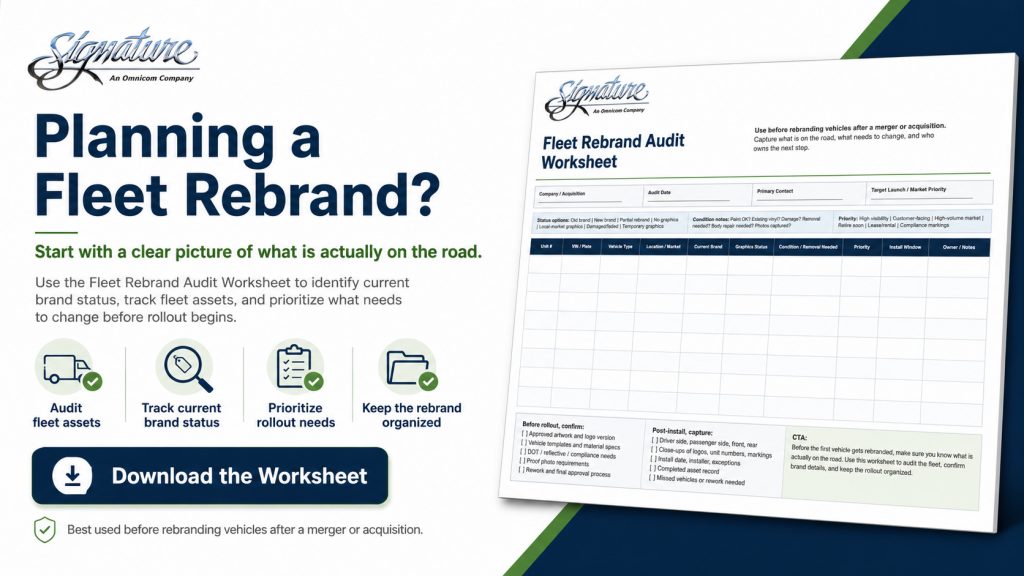
Use the Fleet Rebrand Audit Worksheet to identify what you have, what needs to change, and which vehicles should move first.
Prompt to download the Fleet Rebrand Audit Worksheet.
FAQs About Fleet Rebranding After Merger
What is fleet rebranding?
Fleet rebranding means updating vehicle graphics, decals, wraps, markings, and related brand elements after a company changes its name, logo, ownership, or brand identity.
Why does fleet rebranding get harder after an acquisition?
Fleet rebranding gets harder after an acquisition because the company may inherit unknown assets, old graphics, inconsistent records, local vendors, mixed vehicle types, and different brand standards.
What should companies do before rebranding acquired fleet vehicles?
Companies should start with a fleet audit. They need to identify each vehicle, confirm its location, document its current graphics, check its condition, and decide whether it needs removal, replacement, temporary branding, or a full graphics update.
How Long Does Rebranding After Merger Take for Fleet Vehicles?
The timeline depends on the fleet size, vehicle locations, graphics complexity, installation access, material availability, and operational schedules. A small regional fleet may move quickly, while a national fleet may need a phased rollout.
Who should manage fleet branding during an acquisition?
Fleet branding usually needs input from marketing, fleet, operations, procurement, finance, and local branch teams. However, one central team should own the process so vendors, installers, and internal stakeholders work from the same plan.
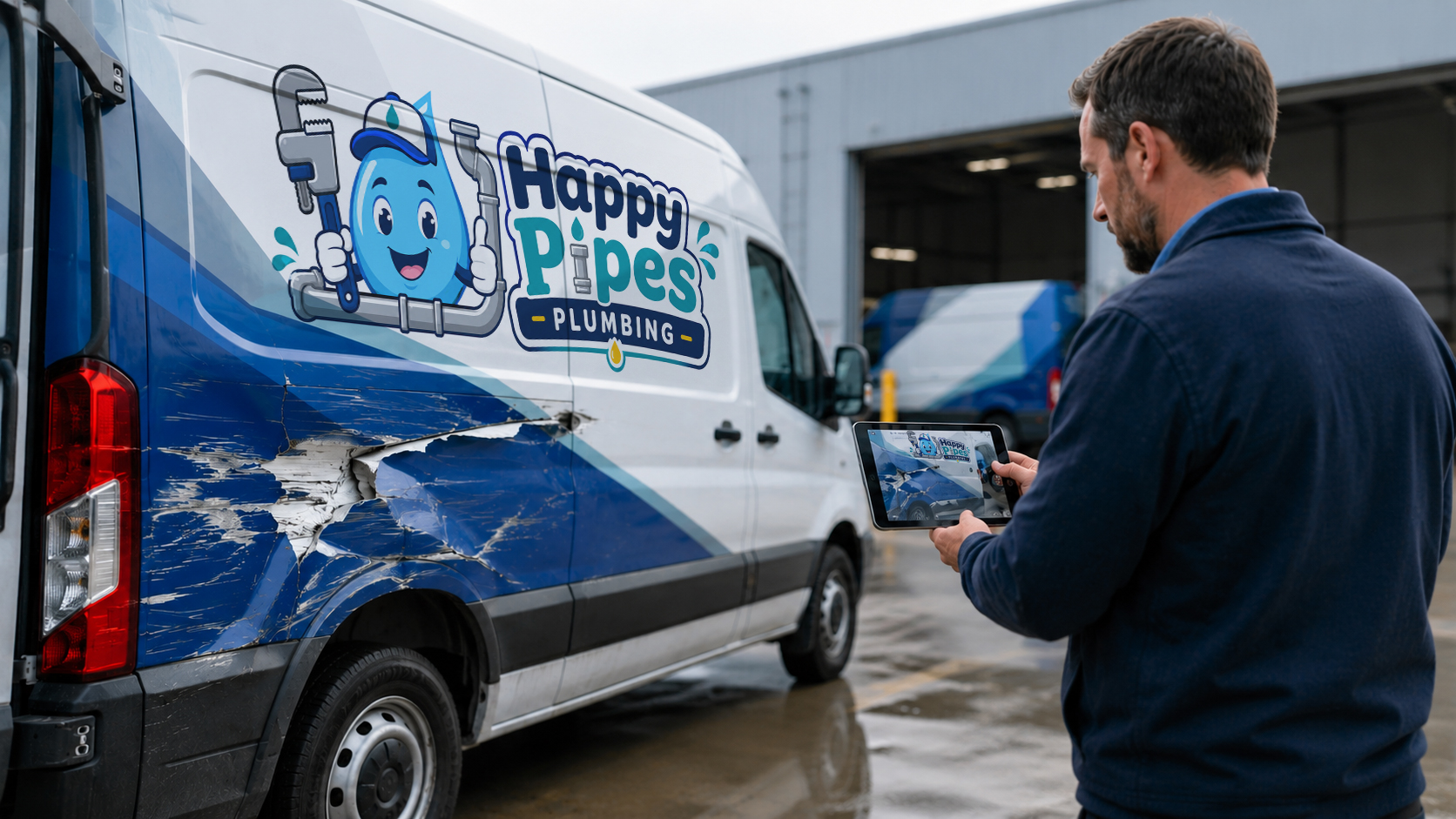
When a branded fleet vehicle gets damaged, the first priority is clear: repair the vehicle, handle any needed vehicle wrap repair, and get it back on the road.
From there, the practical questions usually come next. How bad is the damage? How long will the vehicle be out of service? What does insurance need?
However, if that vehicle carries graphics, decals, reflective markings, or a full wrap, the repair involves more than the vehicle itself. The brand needs attention too.
A collision, scrape, panel replacement, or body shop repair can leave a branded vehicle looking mismatched or unfinished. So for fleet managers and brand owners, the job is not just to fix the vehicle. They also need to make sure the brand looks right when the repair is complete.
That is where good documentation comes in.
What Is Vehicle Wrap Repair?
Vehicle wrap repair means replacing, repairing, or reinstalling graphics after damage affects part of a wrapped or branded vehicle.
Depending on the damage, that may include:
Replacing graphics on a repaired door, hood, bumper, or side panel
Matching new vinyl to the graphics already on the vehicle
Reprinting damaged decals or lettering
Reapplying DOT numbers, reflective graphics, or compliance markings
Removing damaged wrap material before body work begins
Reinstalling graphics after paint or collision repair
Confirming the finished vehicle still matches brand standards
On one vehicle, that may sound simple. However, for a national fleet, the process can get complicated fast.
For example, different vehicles may carry different graphic versions. Some may still use older brand standards. Others may include local phone numbers, unit numbers, safety markings, or campaign-specific graphics.
Because of that, good records matter. Without them, what should be a straightforward repair can quickly turn into guesswork.
Why Documentation Matters After Fleet Vehicle Damage
After an accident, teams often focus on the vehicle first and the graphics second. The vehicle goes to the body shop, the shop repairs or replaces panels, paint work gets finished, and then someone realizes the branding still needs attention.
That creates problems.
Without clear photos, original artwork, installation records, or vehicle history, teams have a harder time answering basic questions:
What graphics were on the vehicle before the damage?
Which panels did the damage affect?
Did the accident damage the wrap, or did damage happen during repair?
What material did the original installation use?
Was the graphic reflective, laminated, temporary, removable, or permanent?
Did the damaged panel include unit numbers, safety markings, or brand messaging?
Does the repaired vehicle still match the rest of the fleet?
That is why good documentation matters. It keeps fleet, operations, insurance, and brand teams working from the same information. While it does not guarantee claim coverage, since every policy works differently, it does make the repair process much cleaner.
What to Document Before Vehicle Wrap Repair
Before anyone removes, covers, or repairs damaged graphics, fleet managers should capture the vehicle’s condition as clearly as possible.
At minimum, document the following:
Full Vehicle Photos
First, take wide photos of every side of the vehicle, not just the damaged area. These photos show how the graphics fit the full asset and help the repair team confirm what needs replacement.
Capture:
Driver side
Passenger side
Front
Rear
Roof, if graphics are present
Any trailer, cab, or specialty equipment areas
Close-Ups of the Damage
Next, take detailed photos of the damaged panels, scratches, dents, tears, peeling vinyl, lifted edges, or missing graphics.
Also, photograph the damage from multiple angles. A close-up alone does not give the repair team enough context. They need to see exactly where the damage sits on the vehicle and how it relates to doors, seams, panels, bumpers, and body lines.
Unit Number, VIN, and Location
Then, tie every damaged vehicle to a specific asset record.
Document:
VIN
Unit number
License plate
Vehicle make, model, and year
Location or market
Date of damage
Date photos were taken
This step matters because many fleet vehicles look alike. If several white vans or box trucks go through repair at the same time, clear identification helps everyone avoid confusion.
Existing Brand Details
Finally, capture any brand details that could affect reprinting or replacement before vehicle wrap repair begins.
That may include:
Logo placement
Color breaks
Taglines
Service lines
Phone numbers
Website URLs
QR codes
Reflective graphics
DOT numbers
Decal placement
Campaign-specific graphics
These details can disappear quickly once a shop removes or paints the damaged panel. When the graphics team sees them upfront, they can restore the vehicle more accurately.
What Installation Records Should Include
A strong vehicle wrap repair process starts long before an accident happens. It starts with good installation records.
For branded fleets, those records should include:
Approved artwork files
Vehicle templates
Material specifications
Laminate specifications
Install date
Installer or installation location
Proof photos
Asset number or VIN
Any exceptions or field adjustments
Repair or replacement history
These records give the graphics provider a clear starting point when repair work comes up.
Without them, the team may need to recreate the layout from photos, estimate placement, or hunt down old artwork. That slows the repair down and increases the chance of an inconsistent result.
Why Vehicle Wrap Repair Is Not Always a Simple Reprint
A lot of people assume damaged graphics can simply be reprinted and replaced.
Sometimes they can. But not always.
A few things can change how the repair needs to happen:
Vinyl Ages Over Time
Sun, weather, road grime, and washing can change the look of vinyl over time. A newly printed panel may not match the older graphics already on the vehicle.
That matters most on large panels with solid brand colors. Even when the artwork file is right, the existing wrap may have faded enough to make the repair noticeable.
Damage Can Cross Multiple Panels
A scrape may look like it only affects one spot, but the graphic may run across doors, seams, or body lines. If the repair team replaces only one small section, the design may not line up correctly.
Paint and Body Work Can Change the Surface
When a body shop repairs, replaces, or repaints a panel, the surface may need time to cure before new graphics go on. If the graphics are installed too soon, the vinyl may not adhere properly or may fail later.
Different Vehicles Need Different Layouts
Fleet graphics are not one-size-fits-all. A Ford Transit, Ram ProMaster, Chevrolet Express, box truck, trailer, or service van may each need a different layout.
That is why accurate vehicle data matters. It helps the repair team replace the right graphics, in the right place, on the right vehicle.
How Insurance Claims and Graphics Repair Overlap
Insurance claims usually focus on the vehicle damage first. But when the vehicle carries branded graphics, the repair scope may need to include the wrap too.
That is why documentation matters.
When branded graphics are damaged, the repair estimate should account for:
Removing damaged wrap material
Reprinting affected graphics
Reinstalling graphics after body repair
Replacing reflective or safety markings
Matching the repaired area to the approved brand standard
Providing proof photos after completion
Don’t assume the body shop, insurer, graphics provider, and internal brand team all have the same information.
They usually don’t.
Gather the documentation early and confirm the graphics scope before anyone considers the repair complete.
What Can Go Wrong Without Good Documentation
Poor documentation can create avoidable problems after a vehicle accident.
For example:
The wrong graphic version gets reprinted
A repaired vehicle returns to service with missing branding
A local vendor recreates artwork incorrectly
The replacement panel does not match the rest of the fleet
DOT or reflective markings are missed
The brand team cannot confirm the repair was completed correctly
Insurance, fleet, and operations teams disagree about what was damaged
The vehicle is repaired mechanically but still looks unfinished
These issues are frustrating because they usually happen after everyone thinks the problem is solved.
The vehicle may be road-ready, but not brand-ready.
Best Practices for Fleet Vehicle Wrap Repair
Fleet managers can make repairs easier when they give every team a clear process for documenting damage and handling graphics repair.
A strong process should include:
1. Photograph the vehicle before anyone removes anything. Start with the full vehicle, then capture the damaged area, unit number, and close-ups.
2. Identify the exact asset. Next, match the damage to the VIN, unit number, location, and graphics version.
3. Confirm which graphics the damage affected. Do not rely only on the body shop’s repair scope. Instead, check the graphics separately so nothing gets missed.
4. Check the compliance markings. DOT numbers, reflective graphics, safety decals, and other required markings may also need replacement.
5. Use approved artwork and material specs. Whenever approved files already exist, use them. That helps the team avoid recreating brand graphics from scratch.
6. Coordinate the timing with body repair. New paint, surface prep, and vehicle availability can all affect when graphics can go back on the vehicle.
7. Require final proof photos. Before closing the job, confirm that the repaired graphics match the approved layout.
Why This Matters More for Large Fleets
For a small business with one or two vehicles, the team can usually manage a graphics repair by hand.
But with larger fleets, the process gets harder fast.
A national fleet may have hundreds or thousands of vehicles spread across different regions. Damage can happen in several markets at once. Different body shops may handle the repairs. Local teams may not know which brand standards to follow.
That is when centralized records matter. They give everyone the same information before repairs start, while work is happening, and after the vehicle goes back on the road.
Fleet graphics are not just a design file. They are part of the asset history. When damage, repairs, removals, rebrands, or replacements happen, someone needs to know what changed and whether the vehicle was restored correctly.
How Signature Helps With Vehicle Wrap Repair and Documentation
Signature Graphics keeps fleet graphics programs organized before, during, and after installation.
When damage happens, we help teams connect the vehicle, the approved artwork, the damaged area, the replacement graphics, and the final proof of completion.
That visibility matters when several teams touch the same repair.
The goal is simple: repair the vehicle, restore the brand correctly, and prevent confusion the next time that asset needs service.
Use this checklist to document damage, guide repairs, and help protect brand consistency.
FAQs About Vehicle Wrap Repair
Can you repair a damaged vehicle wrap?
Yes. In many cases, a graphics provider can repair a damaged vehicle wrap by replacing the affected section or panel.
However, the right approach depends on a few things: where the damage happened, how old the existing graphics are, what material the original wrap used, and whether the vehicle also needs body or paint repair.
Does insurance cover vehicle wrap repair?
It depends on the insurance policy, the claim, and how the team documented the graphics.
Because coverage can vary, fleet managers should check with their insurance provider. Still, good photos, installation records, and repair documentation can help show what the damage affected and what needs replacement.
Can you replace only one section of a vehicle wrap?
Sometimes. If the damage affects one isolated area, the graphics provider may be able to replace only that section.
However, a partial repair does not always blend perfectly. Color aging, panel alignment, material availability, and design placement can all affect whether the repaired section matches the rest of the vehicle.
What photos should I take after fleet vehicle damage?
Start with full photos of the vehicle from every side. Then take close-ups of the damage, the unit number, the VIN or license plate, and any affected graphics.
Also, capture decals, reflective markings, compliance information, and any brand details that may need replacement.
Should vehicle graphics come off before body repair?
In many cases, yes. The body shop may need to remove damaged graphics before it repairs or paints the vehicle.
Because timing matters, the body shop and graphics provider should coordinate the work. That way, the repaired surface is ready when new graphics need to go on.
How long does vehicle wrap repair take?
The timeline depends on the damage, artwork availability, material availability, body shop schedule, paint cure time, and installation access.
However, approved artwork and clear documentation can help the team avoid delays and move the repair forward faster.
A fleet graphics program does not end after installation. Once branded vehicles hit the road, they are exposed to weather, washing, road debris, sunlight, fuel, dirt, and daily wear.
That is why fleet graphics maintenance is so important.
A well-maintained fleet helps protect your brand investment and keeps your vehicles looking professional for as long as possible.
Why Fleet Graphics Maintenance Matters
Your vehicles are often seen by customers, prospects, employees, and the general public. When graphics are clean, consistent, and well-maintained, they reinforce a strong brand image.
When graphics are faded, peeling, damaged, or mismatched, they can create the opposite effect.
Maintenance helps extend the life of your graphics, reduce avoidable damage, and keep your fleet looking unified across every location.
Wash Vehicles Regularly
One of the simplest ways to protect fleet graphics is to keep vehicles clean. Dirt, salt, grime, fuel residue, and environmental buildup can affect the appearance of the graphics over time.
A regular washing schedule helps preserve color, finish, and overall presentation. Gentle washing methods are best. Harsh pressure, abrasive brushes, and aggressive chemicals can damage vinyl graphics or lift edges if used incorrectly.
For fleets operating in areas with snow, road salt, heavy rain, construction zones, or high heat, regular cleaning becomes even more important.
Inspect Graphics Often
Routine inspections help catch small issues before they become bigger problems. Fleet managers should look for lifting edges, scratches, bubbling, fading, cracked material, missing decals, or damage from accidents and repairs.
Inspections can be done during regular vehicle maintenance or at scheduled intervals throughout the year. The key is to make graphics part of the normal fleet review process, not an afterthought.
Address Damage Quickly
Even high-quality graphics can be damaged in daily operations. A vehicle may scrape against a dock, go through a repair, or experience wear in a high-contact area.
When damage happens, quick action helps prevent the issue from spreading. Replacing a section of graphics early can keep the vehicle looking professional and may help avoid more extensive updates later.
Keep Replacement Graphics Organized
For large fleets, reordering graphics should be simple. When replacement decals, panels, or kits are needed, teams should know exactly what to order and where it belongs.
A clear inventory and ordering process helps reduce confusion and ensures replacement graphics match the approved brand standards. This is especially important for national fleets with multiple vehicle types and locations.
Know When It Is Time to Remove or Replace Graphics
Maintenance can extend the life of fleet graphics, but every program eventually reaches a point where graphics need to be replaced. Fading, outdated branding, vehicle turnover, or damaged material may all signal that it is time for an update.
Professional removal is important because improper removal can create additional labor, leave adhesive behind, or affect the vehicle surface.
Final Thoughts
Fleet graphics are a long-term brand investment. With the right maintenance plan, companies can protect that investment and keep their vehicles looking sharp on the road.
Regular washing, routine inspections, quick repairs, organized replacement graphics, and professional removal all help maintain a strong and consistent fleet presence.
FAQs
How often should fleet graphics be cleaned?
Fleet graphics should be cleaned regularly to remove dirt, road grime, salt, fuel residue, and environmental buildup. The right schedule depends on how often the vehicles are used, where they operate, and what conditions they are exposed to. Fleets operating in winter weather, construction areas, or high-mileage routes may need more frequent cleaning.
Can pressure washing damage vehicle graphics?
Pressure washing can damage fleet graphics if the pressure is too high, the nozzle is too close, or water is sprayed directly at the edges of the vinyl. Gentle washing methods are best to help protect the graphics and prevent lifting, peeling, or premature wear.
What should fleet managers look for during graphics inspections?
Fleet managers should look for lifting edges, bubbling, scratches, fading, peeling, missing decals, cracked material, or damage from repairs and daily use. Catching these issues early can help keep vehicles looking professional and prevent small problems from becoming larger ones.
Can damaged fleet graphics be repaired?
In many cases, damaged sections of fleet graphics can be repaired or replaced without redoing the entire vehicle. Having accurate records, approved artwork, and organized replacement graphics makes it easier to match the existing branding and maintain a consistent fleet appearance.
How long do fleet graphics last?
The lifespan of fleet graphics depends on several factors, including material quality, installation, climate, vehicle usage, washing methods, and overall care. Regular maintenance can help extend the life of the graphics and keep the fleet looking clean and consistent.
We proudly use 3MTM graphic films and overlaminates.
Signature Graphics has built a strong reputation as a leader in custom manufacturing and inventory management.
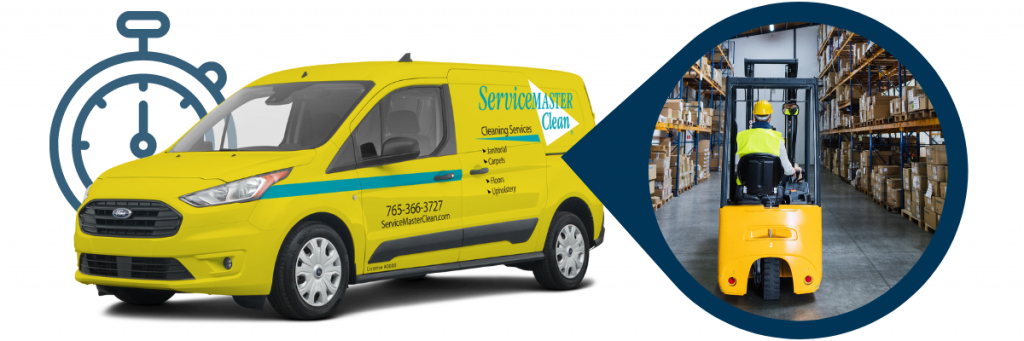
One of their most valued partnerships has been with ServiceMaster Brands, a national company providing critical services through a vast network of franchisees, corporate-owned entities, dealers, and upfitters.
For over 26 years, Signature Graphics has worked closely with ServiceMaster to deliver tailored, turnkey solutions, including a comprehensive inventory program and custom manufacturing services.
This case study explores how Signature Graphics’ inventory and custom branding solutions have successfully addressed the evolving needs of ServiceMaster, ensuring brand consistency and operational efficiency across their fleet of vehicles and other brand touchpoints.
Background on ServiceMaster Brands and Signature Graphics
ServiceMaster Brands is known for its essential services, which are offered through a network of franchises and corporate-owned entities across the U.S. and beyond. Given the size of their network, maintaining a consistent brand identity across all locations is crucial for their business.
Signature Graphics has been the key partner in managing ServiceMaster’s branding needs, providing both a stock inventory program and custom manufacturing solutions to ensure that brand materials such as vehicle graphics, signage, and promotional assets are easily accessible. The long-standing partnership has enabled ServiceMaster to streamline operations, providing franchisees and corporate entities with fast, reliable access to branded materials.
Challenges Faced by ServiceMaster
Event Coordinator Alla Daniel highlighted the importance of these wayfinding tools in her testimonial:
Before partnering with Signature Graphics, ServiceMaster faced a range of challenges, including:
Ensuring a consistent brand identity across all franchise locations, corporate offices, and service vehicles.
Managing both stock inventory for common branding materials and custom manufacturing for unique needs.
Handling a growing number of vehicle installations while maintaining efficient, timely turnarounds on orders.
Given their large franchise network, ServiceMaster required a highly scalable, flexible solution that could accommodate the unique needs of various stakeholders, from small franchise owners to larger corporate-owned entities.
Signature Graphic’s Solution: Comprehensive Inventory Program
To meet these challenges, Signature Graphics implemented a comprehensive inventory program that offered both stocked items and custom manufacturing.
This program allowed ServiceMaster to maintain its corporate-approved branding standards across various locations.
Key features of Signature’s solution include:
A custom manufacturing program for non-stock, corporate-approved branding materials.
Multiple ordering methods, such as an eCommerce platform, dedicated email channels, and direct order forms. Franchisees, corporate entities, and dealers can order through whichever method best suits their needs.
Installation services to complete the turnkey offerings, ensuring that ServiceMaster’s vehicles are branded quickly and consistently.
By offering a diverse set of solutions, Signature Graphics enabled ServiceMaster to address the unique needs of its franchisees and corporate entities.
Program Success Factors
Several factors contributed to the success of Signature Graphic’s inventory program for ServiceMaster Brands.
Flexible ordering options: Franchisees, corporate-owned entities, dealers, and upfitters could place orders through a variety of channels, including online platforms, email, and direct communication with customer service coordinators.
Dedicated customer service: A team of 3-5 dedicated staff members at Signature Graphics ensured quick response times for orders and inquiries. This personal level of service proved to be a critical element in the program’s success.
Custom and stock solutions: Signature Graphics’ ability to integrate custom manufacturing with stock program options allowed ServiceMaster to address the unique needs of each franchisee, from small-scale orders to large vehicle branding projects.
Scale of the Program: Fleet Touchpoints
Signature Graphics plays a pivotal role in maintaining the branding consistency of ServiceMaster’s large fleet of vehicles.
Each year, Signature ships graphics for between 500 to 1,000 vehicles. This volume speaks to the program’s scalability and its ability to accommodate the growing needs of the ServiceMaster brand as it expands.
With a nationwide fleet and the continued growth of the franchise network, Signature Graphics has proven capable of managing both high-demand periods and the steady stream of requests that come in year-round.
Contact us today to learn how our innovative, easy-to-use graphics can elevate your next event.
Customer Service Commitment
One of the standout features of Signature Graphic’s program for ServiceMaster Brands is its strong customer service commitment.
With a dedicated team of 3-5 Signature employees focused solely on managing ServiceMaster’s account, they are able to provide rapid responses to inquiries and ensure that orders are processed efficiently.
As a key member of the Signature Graphics team commented, “We are unique in our commitment to improving ordering processes, and having a dedicated customer service support staff of 3-5 for rapid attention to ServiceMaster franchisees, corporate entities, dealers, and upfitters positions us as a leader in our industry. We also dedicate time and effort to efficiencies within the graphics program and industry-leading graphic performance and warranties.”
This hands-on approach has earned the trust and satisfaction of ServiceMaster’s diverse network, from franchisees to corporate managers.
The Results: Measurable Impact on ServiceMaster’s Brand Consistency
The impact of Signature Graphic’s inventory program on ServiceMaster Brands has been significant.
The program has helped maintain a consistent brand identity across hundreds of franchise locations and corporate-owned entities, ensuring that vehicles and signage are all in line with the brand’s standards.
The ability to provide timely delivery and rapid response to orders has also helped increase satisfaction among ServiceMaster franchisees and corporate partners, solidifying Signature Graphics as a trusted partner.
Future Outlook
As ServiceMaster continues to expand, Signature Graphics is well-positioned to support their growth.
The inventory program is designed to be flexible, allowing it to adapt to the brand’s evolving needs.
Looking forward, Signature Graphics plans to further streamline the ordering process and continue enhancing its customer service capabilities, ensuring that new franchisees can seamlessly adopt the inventory and branding program as they join the ServiceMaster family.
Lessons Learned and Best Practices
Signature Graphics’ long-standing partnership with ServiceMaster Brands has revealed several best practices for managing large-scale inventory programs
Flexibility is key: Offering multiple ordering channels and a mix of stock and custom options allows the program to adapt to the varied needs of franchisees and corporate entities.
Dedicated customer service ensures rapid response times and customer satisfaction.
Continuous improvement in processes and materials is essential to staying ahead in a competitive industry.
Customer Service Commitment
The 26-year partnership between Signature Graphics and ServiceMaster Brands exemplifies the power of a well-executed inventory program.
By offering a mix of stock inventory and custom manufacturing, and backing it with top-tier customer service, Signature Graphics has helped ServiceMaster maintain a consistent brand identity across its franchise network.
As ServiceMaster continues to grow, Signature Graphics remains committed to improving its solutions, maintaining its position as a leader in the branding and inventory management industry.
We proudly use 3MTM graphic films and overlaminates.