Posted in News, UncategorizedTagged , , , , , , , , , , , ,

AI Can Help Start a Fleet Graphics Concept, it Takes Human Creative Expertise to Make It Road-Ready.

AI is quickly becoming part of the creative process for many companies. From early logo ideas to full vehicle mockups, more brands are experimenting with AI-generated visuals to explore what their fleet graphics could look like.

And in many ways, that makes sense. AI can be fast. It can help teams visualize ideas. It can give internal stakeholders something to react to before a formal design process begins. For companies in the early stages of a brand refresh, fleet rollout, or new vehicle graphics program, AI can be a useful starting point.

But when it comes to fleet graphics, a starting point is not the same as a finished design.

Vehicle graphics have to do more than look good on a screen. They need to work across real vehicles, real materials, real installation conditions, and real-world visibility. That is where human design expertise, production knowledge, and fleet graphics experience become essential.

At Signature Graphics, we understand that AI-generated concepts are becoming part of the conversation. Our role is to help customers understand what those concepts can do, where their limitations are, and how our team can move an idea from inspiration to a powerful, production-ready fleet graphics program.

AI is most helpful when it is treated as a brainstorming tool.

For companies that are still trying to define the look and feel of a fleet program, AI can help generate visual directions quickly. It can give teams a way to compare styles, explore color palettes, test general design themes, or gather feedback from internal decision-makers.

Maybe your team is trying to decide whether the fleet should feel bold and modern, clean and corporate, energetic and colorful, or more traditional. AI-generated concepts can help bring those early conversations to life.

Carrie, Creative Director of National Accounts and just shy of 30 years as a graphic designer at Signature Graphics, explains that AI concepts can help reveal a customerโ€™s general preferences early in the process.

โ€œWhat is often useful from AI generated concepts is the basic likes/dislikes for a client. AI can come up with concepts so quickly, it would give a designer a better target at hitting rather than throwing something on the wall and trying to make it stick.โ€
Carrie Flores | Signature Graphics

Kenzie, a Graphic Designer at Signature Graphics, also sees AI as something that can have a place in the earliest stages of idea development, as long as it is not treated as the final answer. She recommends using it โ€œin the early stages to gather ideas,โ€ but also emphasizes the importance of taking that starting point and shaping it into something original and brand-specific.

In other words, AI can help a customer say, โ€œWe like this direction,โ€ or โ€œThis feels too busy,โ€ or โ€œThis is closer to what we had in mind.โ€ That kind of feedback is valuable. It gives the design team a better understanding of the customerโ€™s taste, goals, and expectations.

But it is only the beginning.

An AI concept is not usually ready to print

One of the most important expectations to set is that an AI-generated vehicle concept is typically not a production-ready file.

A fleet graphics design needs to be built with production in mind. It must account for the specific vehicle make, model, body style, measurements, curves, doors, windows, handles, hinges, seams, fuel doors, placards, and installation requirements.

Most AI-generated images are flattened visuals. They may look like a finished design, but they usually do not include the layered artwork, vector elements, brand assets, measurements, or production files needed to manufacture graphics at vehicle scale.

Carrie explains the issue clearly.

โ€œAt this point, resolution of AI generated concepts is not good enough for printing as large as vehicles require,โ€ Carrie said. โ€œIn addition, when AI generates a concept, it does so on the vehicle, not giving us actual production files, so there is no real way to remove the artwork from the vehicle because AI gives a flattened JPEG version.โ€

Kenzie sees this challenge often in the design process. When customers bring in an AI-generated concept, the visual may communicate a general idea, but the artwork itself usually has to be rebuilt or reinterpreted before it can become something Signature can produce.

โ€œIt is never ready to print,โ€ Kenzie said.

That may sound direct, but the reason is practical. Fleet graphics are produced at a much larger scale than a digital image or small-format print. If the image is low resolution, flattened, or built on an unrealistic vehicle mockup, it cannot simply be enlarged and installed without losing quality or accuracy.

This does not mean the AI concept has no value. It means the concept should be understood as inspiration, not final artwork.

Fleet design is different from designing a digital ad, brochure, or social media graphic. A vehicle is not a flat rectangle. It is a three-dimensional surface with physical interruptions and installation variables.

A design that looks impressive in an AI-generated image may not work on the actual vehicle.

For example, a website or phone number may look clean in a concept image, but on the real vehicle, that text could fall across the gap between a pickup cab and bed. A logo may appear centered on an RV mockup, but if it crosses a slide-out section, the logo could break apart when that section is extended. AI-generated layouts may also overlook windows, handles, hinges, body lines, placards, or areas where graphics cannot be installed safely or effectively.

Carrie pointed to this as one of the biggest differences between AI-generated visuals and human-developed fleet concepts.

โ€œAI can develop a concept based on what the user tells them, but not think much further than that about an audience, demographic, longevity, overall feel of a design the way a human can,โ€ she said.

She also noted that โ€œAI has no thought for actual production methods,โ€ including details like door handles, hinges, and driver visibility.

Kenzie echoed that point from a hands-on design perspective.

โ€œAI consistently fails at understanding the compositions of vehicles,โ€ Kenzie said. โ€œIt can not determine whether or not the design will be going over body lines or windows or placards or the flow between the side and rear.โ€

That is one of the biggest gaps between an AI-generated vehicle image and a fleet graphics layout. AI may create a compelling image, but human designers know how to adapt it so it can be produced, installed, and seen clearly on the road.

AI can create eye-catching images, but fleet branding has to do more than grab attention. It has to communicate clearly and consistently.

A branded vehicle may only have a few seconds to make an impression. Drivers, pedestrians, and customers need to be able to understand who the company is, what it does, and how to recognize the brand quickly.

That requires design restraint, hierarchy, and strategy. A successful fleet design needs to consider the audience, the viewing distance, the speed of traffic, the vehicle shape, brand standards, color contrast, logo placement, message clarity, and long-term consistency across the entire fleet.

Kenzie compares vehicle graphics to moving billboards.

โ€œVehicle graphics are moving billboards that require the same level of skill, but taking that message to a much larger audience.โ€
Kenzie Calvin

That perspective is important. Fleet graphics are highly visible brand assets. If a design is too busy, too abstract, or overloaded with visual effects, the viewer may remember that they saw something interesting, but miss the brand message entirely.

Kenzie has seen this happen with AI-generated concepts that try to include too much.

โ€œFrom the AI I have seen most are incredibly busy and have too much information/visual stimulation to convey a message in the amount of time needed,โ€ she said.

For fleet graphics, that moment of recognition matters. A strong design should be memorable, but it should also be clear. The viewer should be able to understand the brand quickly, whether the vehicle is parked, passing in traffic, or seen from a distance.

That is where human input makes a difference. A trained designer is not only making something attractive. They are making decisions that support the brand, the audience, and the way the vehicle will actually be seen.

What AI often misses in fleet graphics planning

AI-generated concepts can be visually interesting, but they often miss important details that affect production and performance.

Common issues include:

  • Text that is too small, distorted, or unreadable
  • Placeholder words, incorrect spelling, or unrealistic phone numbers
  • Logos that are too small or overwhelmed by supporting graphics
  • Designs that ignore body lines, windows, handles, hinges, and seams
  • Artwork that does not flow correctly from the side to the rear of the vehicle
  • Concepts built on vehicles that do not match the actual fleet
  • Visuals that are too busy to communicate clearly in motion
  • Low-resolution or flattened images that cannot be scaled for production
  • Lack of consistency across multiple vehicle types

Kenzie says some of the visual red flags are noticeable once you know what to look for.

โ€œOne of the major red flags I can immediately point out is the smoothness of the design even when it tries to emulate texture, it lacks depth,โ€ she said. She also notes that AI-generated layouts can feel visually inconsistent or physically unrealistic, with โ€œfloating objects, inconsistent colors and texturesโ€ or elements that do not connect naturally.

Carrie explained that AI also tends to focus only on the specific prompt it is given, rather than the larger fleet program.

โ€œAI doesnโ€™t typically account for how a branding message will look across an entire fleet of vehicles for a company,โ€ she said. โ€œIt only considers the one vehicle you ask it to design.โ€

That distinction matters for companies managing more than one vehicle. A fleet design may need to adapt across vans, box trucks, pickups, trailers, service vehicles, or specialty units while still maintaining a consistent brand presence.

What happens when you bring an AI concept to Signature

When a customer brings an AI-generated concept to Signature Graphics, our team does not treat it as a problem. We treat it as part of the discovery process.

The concept helps us understand the direction you are considering. It can show the general style, tone, colors, energy, or visual approach your team is interested in. From there, our designers and program teams can evaluate what will work, what needs to be adjusted, and what must be rebuilt to support production.

โ€œAn AI concept is great for the beginning steps of what a client might be thinking,โ€ Carrie said. โ€œIt can tell us a bit about their style; like if they want flashy and modern, or conservative, or have a retro vibe.โ€

That early direction is useful, but turning it into a finished fleet graphics layout requires additional steps.

That process may include:

  • Reviewing the AI concept for overall direction
  • Identifying which elements are usable as inspiration
  • Comparing the concept to brand standards
  • Confirming the correct vehicle types and specifications
  • Rebuilding or recreating artwork as needed
  • Adjusting layouts around real vehicle features
  • Improving readability, hierarchy, and brand clarity
  • Preparing production-ready files
  • Planning for materials, printing, installation, and rollout needs

Kenzie explains that challenges can happen when an AI-generated concept is treated as an exact final design, especially if it includes effects, artwork, or vehicle details that are not practical to reproduce exactly.

That is why flexibility is important. The goal is not always to copy the AI concept exactly. The goal is to understand the intent behind it and turn that intent into a real-world fleet graphics solution that protects the quality, consistency, and effectiveness of the finished graphics.

How to use AI effectively before starting a fleet graphics project

If your team wants to use AI during the early stages of fleet planning, the best approach is to use it as a communication tool.

Use AI to explore general ideas, not to create final artwork.

Before meeting with a fleet graphics partner, AI can help your team identify:

  • Preferred design styles
  • Colors or moods that feel aligned with the brand
  • Examples of what feels too busy or too plain
  • General likes and dislikes
  • Possible directions for internal discussion
  • Visual themes worth exploring further

When sharing AI concepts with Signature, it is helpful to explain what you like about them. Is it the color? The energy? The layout? The use of photography? The boldness? The simplicity? The more specific your feedback is, the easier it is for our design team to understand the vision and move it forward.

Kenzieโ€™s advice is simple: use the idea as a starting point, then make it your own.

โ€œTake the generic idea and make it your own,โ€ she said.

That is where the strongest creative work happens. AI can help generate a direction, but human designers help shape that direction into something intentional, ownable, and aligned with the brand.

It is also important to stay flexible. An AI-generated image may create a strong first impression, but the final fleet graphics need to be built around your brand standards, your vehicles, your production needs, and your long-term goals.

AI images should support human design, not replace it

AI may continue to improve, and it will likely remain part of the creative conversation. But human expertise should never be removed from the process.

A human designer brings judgment, context, experience, and problem-solving that AI cannot fully replace. Designers use previous project applications and results to improve and learn, they think about the customer, the brand, the message, the vehicle, the production method, the installation process, and the way the finished graphics will perform in the real world.

From a branding perspective, Carrie said human thought remains essential.

โ€œFrom a sheer branding perspective, I will always argue that human thought is more effective, whereas an AI concept is faster,โ€ she said.

Kenzieโ€™s perspective comes from a similar place: strong creative work should preserve the character of the brand. Fleet graphics should not simply look interesting. They should feel intentional, recognizable, and connected to the company they represent.

AI can create patterns, imagery, and layouts quickly, but branding is more than generating a visual. It involves identity, emotion, clarity, trust, and audience connection. Those are human decisions.

Carrie described the evolution of technology as something that both helps and challenges the creative process.

โ€œTechnology seems to make the job easier on one hand, while complicating the request from the client because capabilities have improved, thus increasing a clientโ€™s โ€˜wantโ€™ and โ€˜ask,โ€™โ€ she said.

That balance is important. New tools can help expand ideas, but experienced designers are still needed to turn those ideas into something practical, effective, and brand-right.

The best results happen when AI is used as a tool, not a shortcut.

From concept to fleet-ready graphics

AI can help start the conversation. Signature Graphics helps move it forward.

If your team has used AI to explore fleet graphics ideas, that concept can be a helpful first step. It can give us insight into your vision and help our team understand the direction you want to explore.

From there, Signature brings the design, production, installation, and program experience needed to turn an early concept into graphics that are ready for the road.

Because in fleet branding, the goal is not just to create an interesting image. The goal is to create graphics that represent your brand clearly, consistently, and professionally across every vehicle in your fleet.

Posted in News, UncategorizedTagged , , , , , , , , , , , ,

Donโ€™t Wait Until January: Why Fleet Rollout Planning Belongs in Q4

For many companies, Q4 is a time to wrap up the year, finalize budgets, and prepare for what is next. But for brands managing fleet graphics, Q4 is more than a closing chapter. It is one of the most important planning windows for the year ahead.

Whether your company is preparing for a brand refresh, adding new vehicles, updating franchise graphics, or planning a national rollout, waiting until January to start the conversation can create unnecessary pressure. Fleet graphics programs involve more than artwork and installation. They require planning, coordination, production, logistics, and clear communication across teams. Starting in Q4 gives your brand the time and space to build a smarter rollout plan before the new year is already in motion.

Once January arrives, schedules tend to move quickly. New budgets are active, new goals are in place, and teams are ready to execute. But if a fleet graphics rollout has not already been scoped, those first few weeks can easily become reactive.

Planning in Q4 gives your team time to review what is needed before timelines become urgent. This may include confirming vehicle counts, identifying vehicle types, reviewing existing graphics, gathering brand requirements, and aligning internal stakeholders before production begins.

That early planning helps create a clearer path forward. Instead of starting the year with unanswered questions, your team can enter January with a defined direction, realistic expectations, and the right partners already involved.

Budget conversations are already happening

Q4 is often when companies are finalizing budgets for the upcoming year. That makes it the right time to include fleet graphics in the conversation.

When graphics are planned early, teams can better understand the scope of the program and build it into the annual budget. This is especially important for companies managing large fleets, multiple locations, or phased rollouts across different markets.

A strong budget conversation starts with the right questions. How many vehicles need graphics? Are new vehicles being added next year? Are any existing graphics outdated, damaged, or inconsistent? Will the rollout happen all at once or in phases? Are there installation, shipping, or reporting needs that should be considered?

Answering these questions in Q4 helps brands avoid surprise costs and make more informed decisions about timing, materials, production, and installation.

Fleet graphics programs are not one-step projects. Before graphics ever reach a vehicle, there are important details that need to be worked through.

Artwork needs to be reviewed and adapted to the correct vehicle specifications. Brand standards need to be followed. Materials need to be selected. Production needs to be scheduled. Graphics need to be shipped to the right locations. Installations need to be coordinated around vehicle availability, market needs, and operational timelines.

For national brands and franchise systems, the process becomes even more layered. There may be multiple vehicle types, regional differences, location-specific needs, and brand approval steps that all need to be managed carefully.

Starting in Q4 gives your graphics partner more time to build a rollout plan that accounts for those details. The result is a smoother process, fewer surprises, and a better experience for the teams responsible for getting branded vehicles on the road.

Before planning what comes next, it helps to understand what is already on the road.

A year-end fleet graphics audit can reveal inconsistencies, outdated designs, damaged graphics, missing branding, or vehicles that no longer reflect current standards. It can also help identify which markets, locations, or vehicle types should be prioritized in the next rollout.

For franchise networks and multi-location brands, this step is especially valuable. A fleet may be spread across regions, managed by different teams, or updated at different times. Without a clear review, it can be difficult to know where the brand is showing up consistently and where gaps exist.

Q4 gives companies a natural opportunity to pause, review, and make a plan before new vehicles, new budgets, and new initiatives begin.

Early planning helps prevent rushed decisions

When fleet graphics are planned too late, teams often have to make fast decisions under pressure. That can lead to missed details, inconsistent layouts, rushed approvals, or production timelines that are harder to manage.

Vehicle graphics are highly visible brand assets. They are seen by customers, employees, communities, and competitors. The design, materials, and installation quality all influence how the brand is perceived.

Planning ahead gives teams time to make thoughtful decisions instead of simply trying to meet a deadline. It allows room for design review, production planning, installation coordination, and internal alignment. Most importantly, it helps protect the consistency and professionalism of the brand.

National fleet programs require coordination

For companies managing large-scale rollouts, planning is not just helpful. It is essential.

A national fleet graphics program may involve corporate marketing teams, operations teams, procurement, franchise owners, account managers, installers, and vehicle providers. Each group plays a role in moving the program forward.

Q4 gives these teams time to align before work begins. It allows for clearer communication around scope, timelines, responsibilities, and expectations. It also gives your graphics partner the opportunity to help identify potential challenges before they become problems. When the planning happens early, the rollout can move with more confidence

The right partner makes the process easier

A fleet graphics rollout is easier to manage when you have a partner who understands the full process, not just one piece of it.

At Signature Graphics, we support brands through planning, design adaptation, production, fulfillment, installation coordination, and program reporting. Our team is built to support large vinyl graphics programs and help brands maintain consistency across vehicles, locations, and markets.

For companies preparing for next yearโ€™s fleet needs, Q4 is the ideal time to start the conversation. Early planning gives everyone involved a better understanding of the scope, schedule, and steps required to bring the program to life.

Start the year with a plan already in motion

January may feel like the natural time to start new projects, but for fleet graphics, the smartest planning often begins before the year ends.

By starting in Q4, your team can review the current fleet, align budgets, finalize priorities, and prepare for a smoother rollout in the months ahead. Instead of beginning the year with questions, your brand can begin with a plan.

If your company is preparing for a fleet graphics rollout next year, now is the time to start planning.

Signature Graphics can help you build a program that supports your brand, your timeline, and your fleet.

Posted in News, UncategorizedTagged , , , , , ,

More Miles, More Eyes: Why Summer Matters for Fleet Branding

When summer hits, the roads get busier. Families head out for vacation, commuters adjust routines, delivery demand rises, events pick up, and service vehicles spend more time moving between customers. For businesses with branded fleets, that added movement creates one of the most valuable marketing opportunities of the year.

Fleet branding turns everyday vehicles into high-visibility mobile advertising. And during summer, when more people are on the road, the value of that visibility only increases.

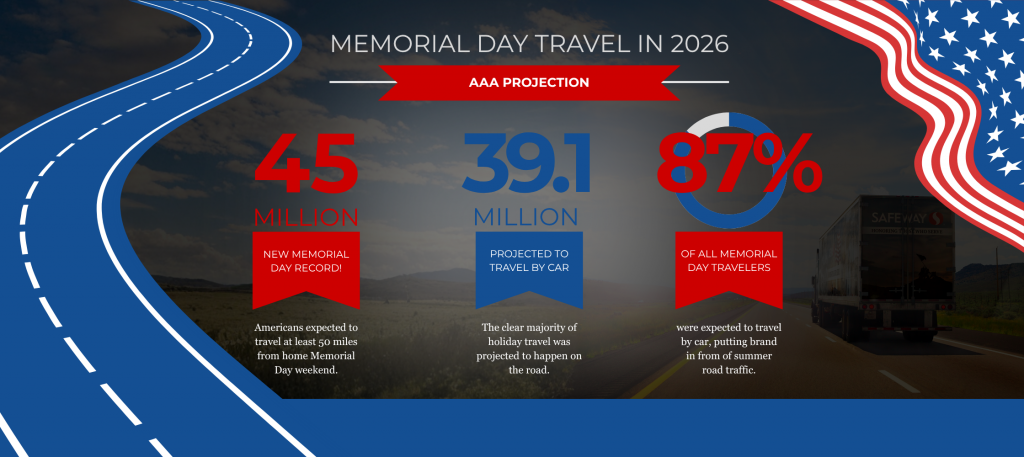
According to AAA, a projected 45 million Americans were expected to travel at least 50 miles from home over Memorial Day weekend in 2026, setting a new Memorial Day weekend record. Of those travelers, 39.1 million were projected to travel by car, making up 87% of all Memorial Day travel.

That matters for brands. More vehicles on the road means more potential customers seeing your fleet graphics, vehicle wraps, service vans, trailers, box trucks, delivery vehicles, and commercial fleet branding in real time.


Summer does not just feel busier on the road. The data supports it.

Federal Highway Administration data, summarized by the Alternative Fuels Data Center, shows that U.S. drivers generally log the most vehicle miles during the summer months, with average vehicle miles traveled peaking in July. The Bureau of Transportation Statistics also notes that vehicle miles traveled tend to be higher in the summer because of more vacation and recreational trips.

For businesses, that creates a simple but powerful marketing equation:

More miles driven = more people reached.

A branded fleet does not wait for someone to search online, scroll past an ad, open an email, or click a sponsored post. It moves through the real world, showing up where people already are: highways, neighborhoods, parking lots, job sites, shopping centers, events, schools, restaurants, and commercial districts.

That kind of repeated exposure builds familiarity. And familiarity is one of the first steps toward trust.


Most businesses already view their vehicles as operational tools. They move products, people, equipment, services, and supplies. But with the right fleet graphics, those same vehicles become a highly visible marketing channel.

Unlike many forms of advertising, fleet branding does not require a customer to be actively looking for your business. A well-branded vehicle can introduce your company to thousands of people simply by doing what it already does every day.

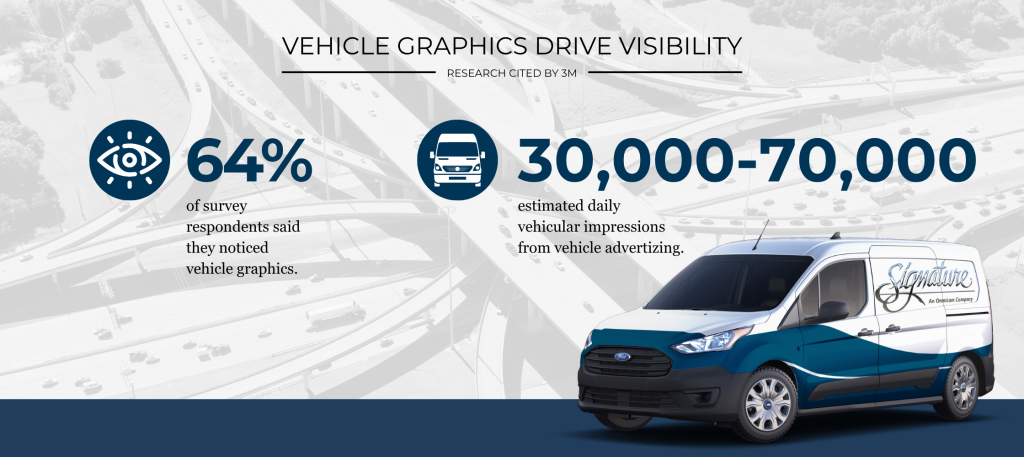
Research cited by 3M shows that 64% of survey respondents said they noticed vehicle graphics, and vehicle advertising can generate an estimated 30,000 to 70,000 daily vehicular impressions.

For companies operating multiple vehicles, that exposure can multiply quickly. One branded van can make an impression. A fleet of branded vehicles can create market presence.


For many businesses, marketing budgets are under constant pressure. Digital ads can be expensive. Search competition can be intense. Social media reach can be unpredictable. Streaming, ad blockers, and changing consumer habits can make it harder to reach people consistently.

Fleet graphics offer a different kind of advantage.

Once a vehicle wrap or fleet graphics program is in place, the brand continues to appear while the vehicle is in use. It reinforces awareness day after day, route after route, without requiring a click, subscription, screen, or algorithm.

3M also points out that vehicle graphics are not subject to ad blockers, commercial-free streaming, or other barriers that can prevent brands from reaching consumers.

That makes fleet branding especially valuable for companies that already have vehicles on the road. Your fleet is moving anyway. The question is whether it is working as hard for your brand as it is for your operations.


Out-of-Home Advertising Still Drives Action

Fleet branding is part of a larger out-of-home advertising environment, and out-of-home media continues to influence consumer behavior.

The Out of Home Advertising Association of America reported that 88% of adults notice out-of-home ads, and nearly 80% of those viewers are inspired to take some type of action. The same survey found that 51% used a mobile device to search for more information about an advertiser after seeing an out-of-home ad.

That is an important insight for fleet branding. A branded vehicle does not have to tell the entire story. It needs to create recognition, build trust, and make the next step easy.

A clear logo, strong message, easy-to-read website, QR code, phone number, or memorable brand visual can turn a passing impression into a search, a visit, a call, or a future buying decision.


Summer Makes Fleet Branding Even More Valuable

Summer is a season of movement. People are traveling, shopping, renovating, relocating, attending events, dining out, managing home projects, and spending more time outside. Many industries also experience increased seasonal demand, including HVAC, plumbing, landscaping, restoration, food and beverage, retail, delivery, construction, logistics, and home services.

For these businesses, summer fleet visibility is not just a nice bonus. It is a competitive advantage.

A branded service van parked in a neighborhood can build awareness with surrounding homeowners. A wrapped delivery truck on a busy highway can reinforce a regional brand. A branded trailer at an event can create a professional, memorable presence. A consistent national fleet can help franchise and enterprise brands look unified across markets.

When customers see your brand repeatedly in real-world environments, your company begins to feel established, active, and trustworthy.


Consistency Matters Across Every Vehicle

The value of fleet branding increases when every vehicle feels like part of the same brand system. Inconsistent logos, outdated decals, mismatched colors, damaged graphics, and unbranded vehicles can weaken recognition and make a fleet look less professional.

A strong fleet graphics program should be built around consistency, durability, and scalability. That means using the right materials, adapting designs properly across different vehicle types, maintaining clear message hierarchy, and ensuring installation quality across locations.

For companies managing large fleets, this is especially important. Every vehicle is a brand touchpoint. Every route is a marketing opportunity. Every inconsistency is a missed chance to reinforce trust.


Summer is the right time to ask whether your fleet is supporting your brand as effectively as it could.

Consider:

  • Are your vehicles clearly branded and easy to recognize from a distance?
  • Is your message readable in traffic?
  • Do your graphics look clean, current, and well maintained?
  • Are all vehicles consistent across your fleet?
  • Could your fleet be doing more to support brand awareness, customer trust, and market expansion?

If the answer is yes, fleet branding may be one of the most practical marketing investments your business can make.


More Miles Should Mean More Brand Momentum

When more people are on the road, your fleet has more opportunities to be seen. Summer creates the perfect environment for brand exposure: higher traffic, more travel, more outdoor activity, and more real-world impressions.

Fleet branding helps businesses turn everyday movement into measurable marketing value. It builds awareness, reinforces credibility, supports customer recall, and keeps your brand visible in the places your audience already lives, works, shops, and travels.

Your vehicles are already moving.

The real question is: how many people are seeing your brand along the way?

Posted in News, UncategorizedTagged , , , , ,

What Can Be Wrapped with Vinyl? More Than You Think…

Branding Without Boundaries: If it Has a Surface, We Can Brand It.

When people think of vinyl wraps, they often picture vehicles or trailersโ€ฆ and while we do plenty of those, thatโ€™s only the beginning.

At Signature Graphics, we specialize in branding without boundaries, using large format graphics and innovative materials to transform nearly any surface into a powerful marketing and brand awareness opportunity.

So when a client asks, โ€œCan we wrap that?โ€
Our answer is usually: Yes. Probably. And if it hasnโ€™t been done before, weโ€™ll help figure it out.


Great branding isnโ€™t limited to one format or one surface. Itโ€™s about meeting your audience where they already areโ€”and sometimes that means thinking bigger, bolder, and more creatively.

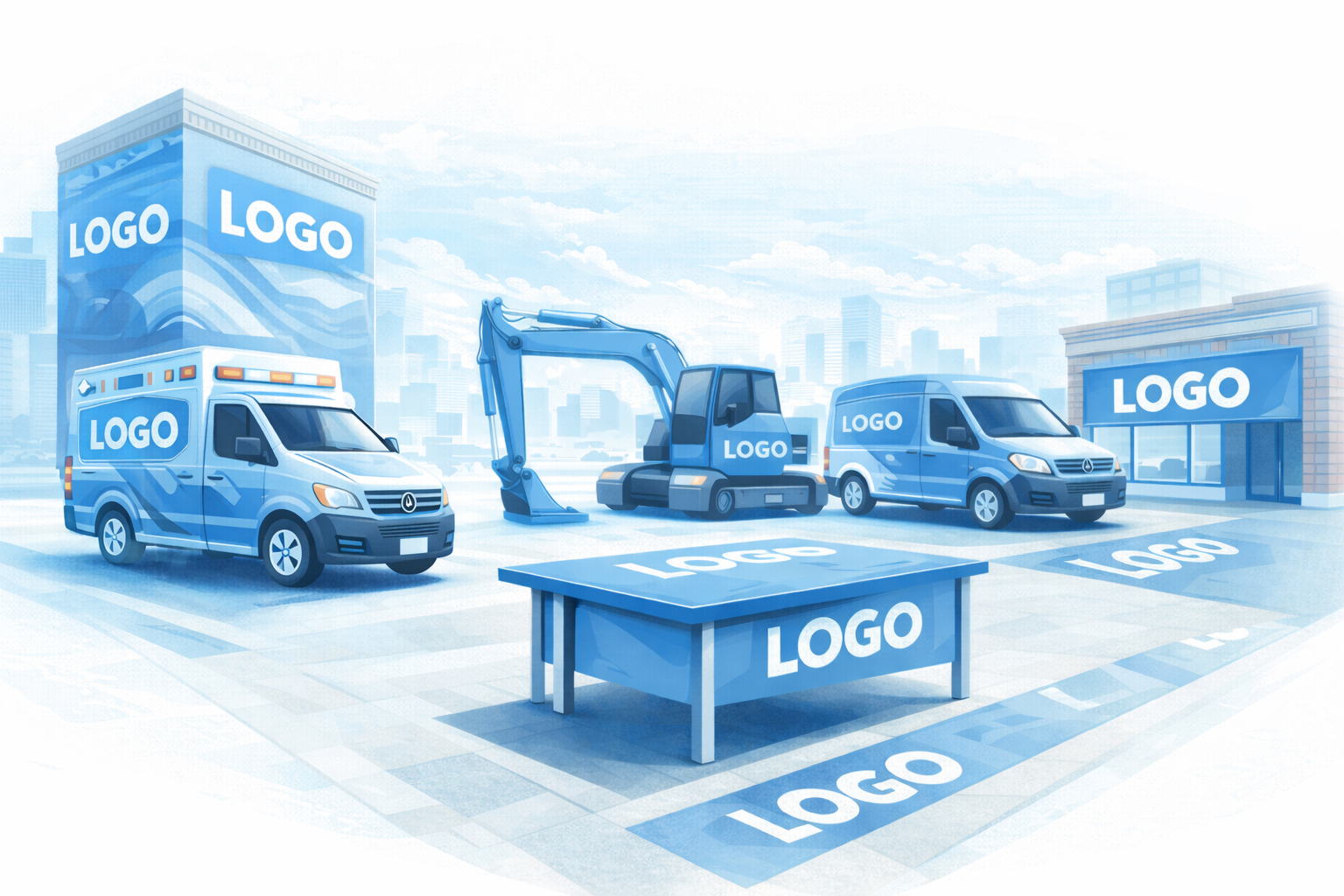
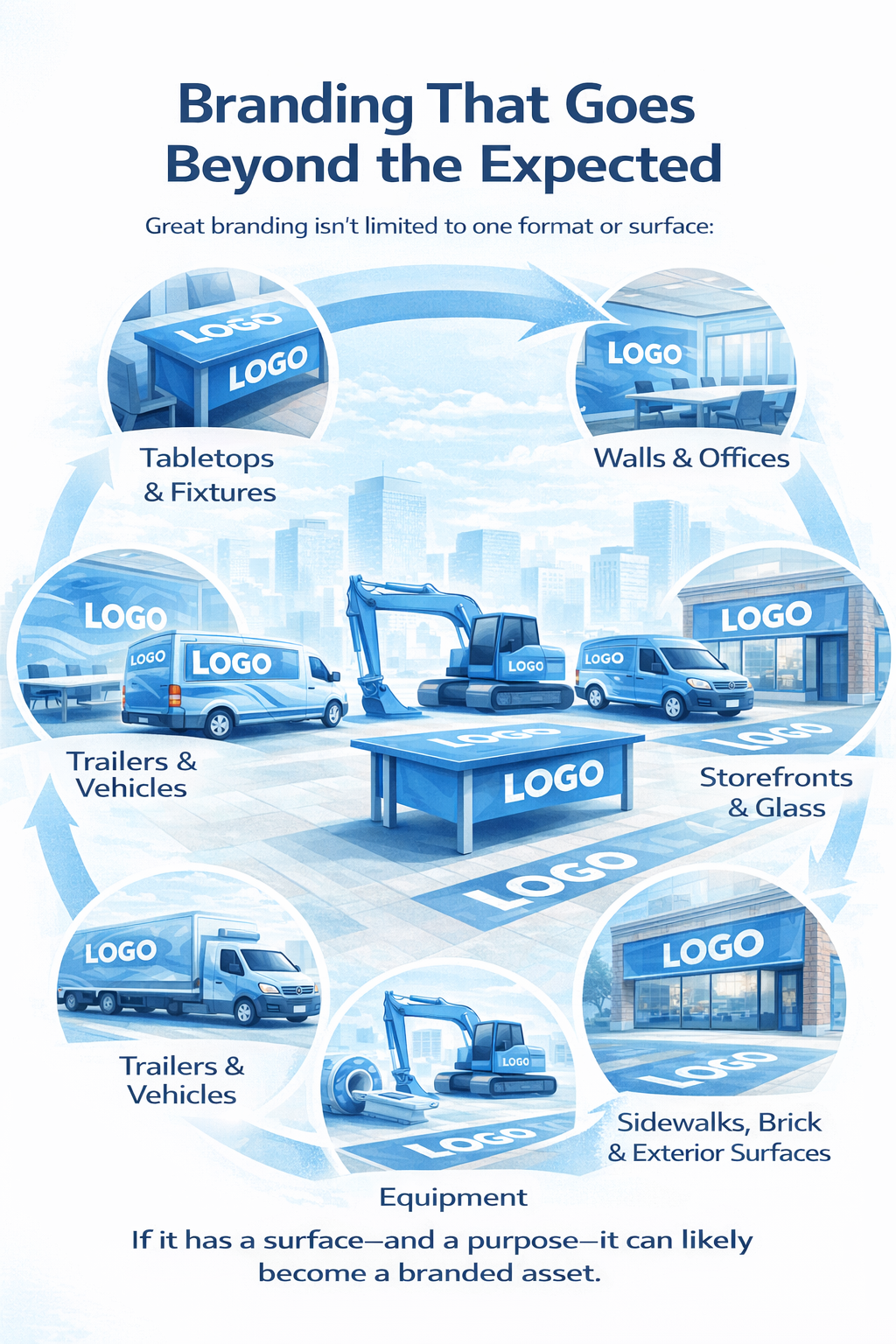
We regularly design and produce vinyl wraps and graphics for:

  • Trailers & Vehicles โ€“ From single units to nationwide fleets, delivering consistency at scale
  • Walls & Offices โ€“ Interior branding that transforms workspaces, conference rooms, and lobbies
  • Storefronts & Glass โ€“ Window graphics that stop foot traffic and reinforce brand presence
  • Floors (Carpet, Tile, Concrete) โ€“ Durable graphics for wayfinding, promotions, or experiential moments
  • Sidewalks, Brick & Exterior Surfaces โ€“ Street-level branding that creates real-world impressions
  • Equipment โ€“ Medical devices, construction equipment, machinery, and more
  • Tabletops & Fixtures โ€“ Custom branding where customers gather, work, or interact

If it has a surfaceโ€”and a purposeโ€”it can likely become a branded asset.


Whether your brand goals are subtle and refined or bold and attention-grabbing, scale, color,design, and material choice all play a role. Our team works with you to ensure your branding on unique surfaces aligns with your overall strategyโ€”no matter how ambitious or unconventional your idea may be.

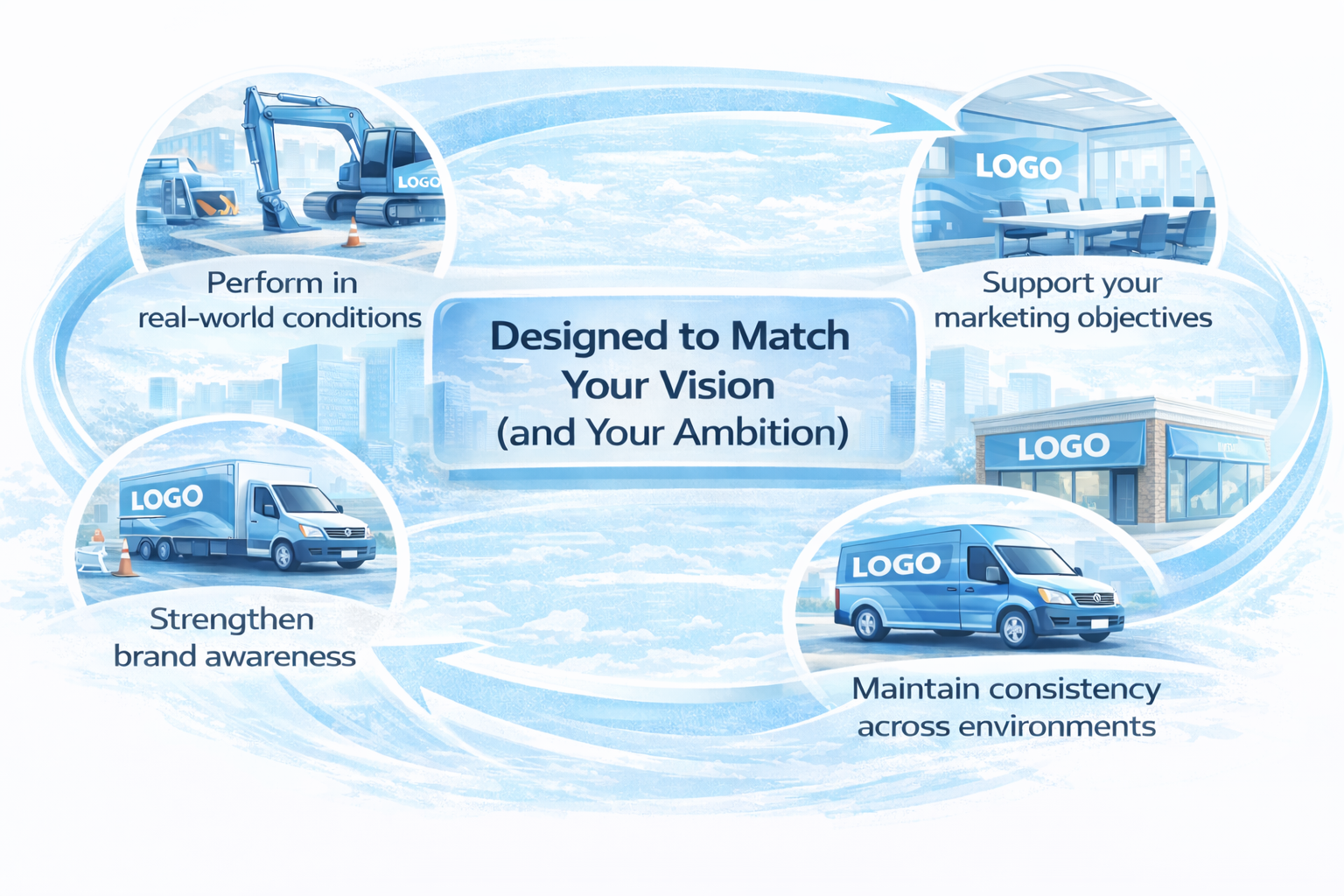
From one-off creative applications to complex, multi-location rollouts, we tailor every solution to:

Perform in real-world conditions

Support your marketing objectives

Strengthen brand awareness

Maintain consistency across environments


Big ideas only work if theyโ€™re executed properly. Thatโ€™s where experience matters. With decades of expertise in large format graphics, specialty materials, and complex installations, Signature Graphics brings your vision to lifeโ€”cleanly, efficiently, and at scale.

So next time youโ€™re standing in a space, looking at a surface, and wondering if it could carry your brandโ€ฆ

Can we wrap that?
Yes. Probably. And weโ€™d love to show you how.

Posted in News, UncategorizedTagged , , , , ,

The Brand Channel Most CMOs Overlook: Their Fleet

Most enterprise brands have tight control over their digital presence.

  • Brand standards are documented.
  • Creative is reviewed.
  • Campaigns are measured.

But once the brand leaves the screen and hits the road, something changes.

Visibility drops.

And for many organizations, control stops.


Fleet vehicles are one of the most visible brand surfaces many organizations own. They move through neighborhoods, cities, campuses, job sites, and customer locations every day.

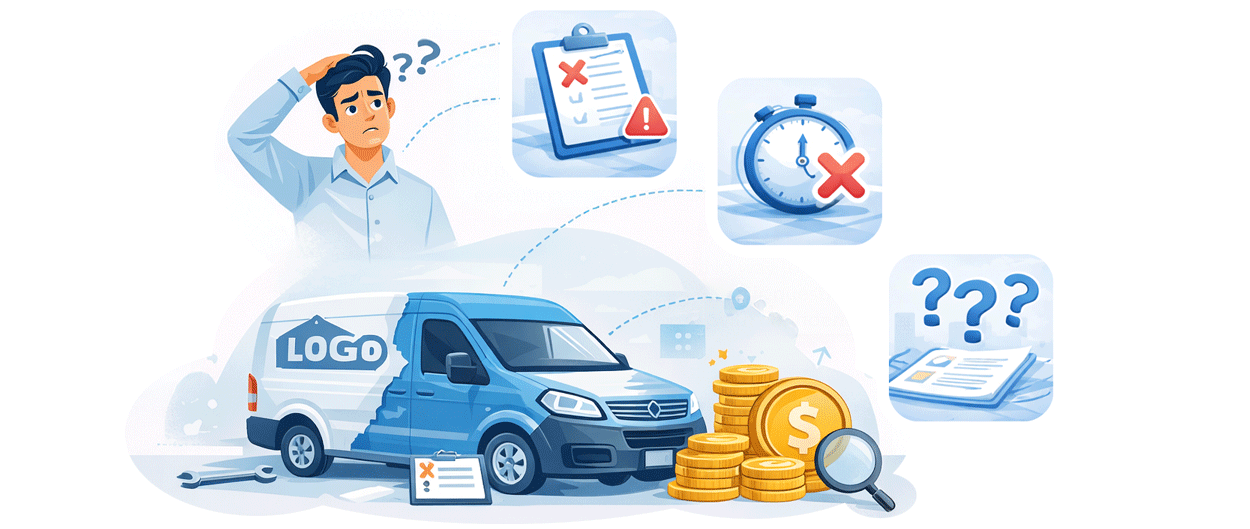
Yet many marketing leaders can’t confidently answer basic questions about them:

  • What’s live right now?
  • Where is it installed?
  • Is it still on-brand?
  • Has anything been damaged, removed, or replaced?

At small scale, this might feel manageable.

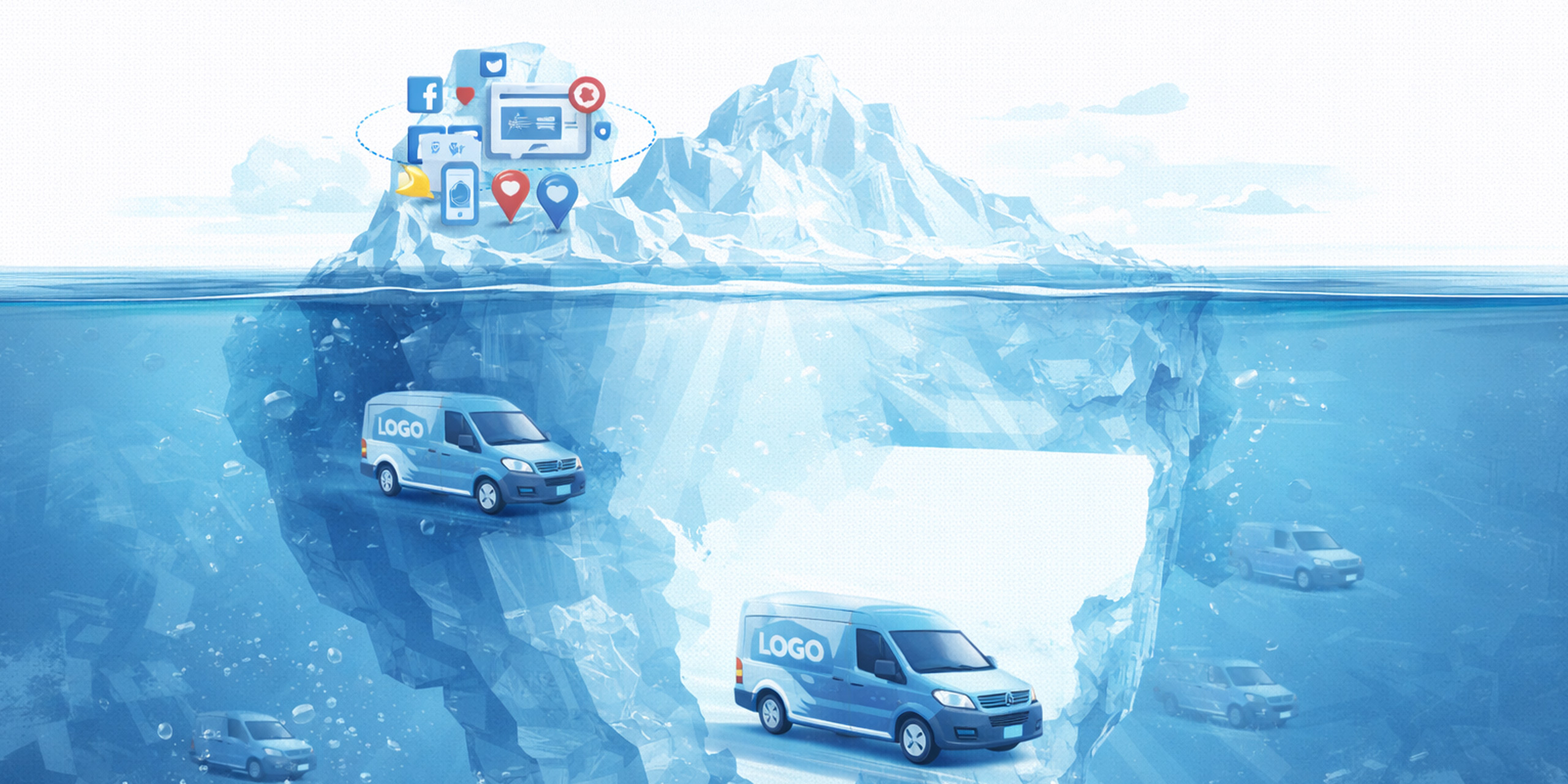
small mid and large fleets as they relate to risk for graphics management

At enterprise scale, it becomes something else entirely: a brand governance gap.


The core issue is not effort. It is mindset.

Fleet graphics are often treated like a one-time production task:

  • Approve the design
  • Install the graphics
  • Move on

But fleet branding doesn’t behave like static signage.

Vehicles rotate. Campaigns change. Installations happen across regions, vendors, and timelines. Graphics wear, peel, or get removed.

This makes fleet branding far closer to a live marketing channel than a completed project. It is public, persistent, and rarely audited.


Without centralized visibility, teams are forced to rely on assumptions:

  • That installs were completed correctly
  • That vehicles still look right
  • That standards are being followed everywhere

The result is more than inconsistency. It is risk:

  • Missed or incomplete rollouts
  • No proof of execution
  • No real-time status for leadership
  • No reliable reporting for marketing teams

Because fleet branding sits ourside traditional marketing technology stacks, these gaps often go unnoticed.

Until something goes wrong.


High-performing marketing organizations are changing how they approach fleet programs.

They are not just approving creative. They are governing execution.

That shift requires real visibility:

  • Knowing what is live, not just what was planned
  • Seeing installs as they happen, not months later
  • Tracking assets at the vehicle level, not just the vendor level
  • Creating accountability after creative approval

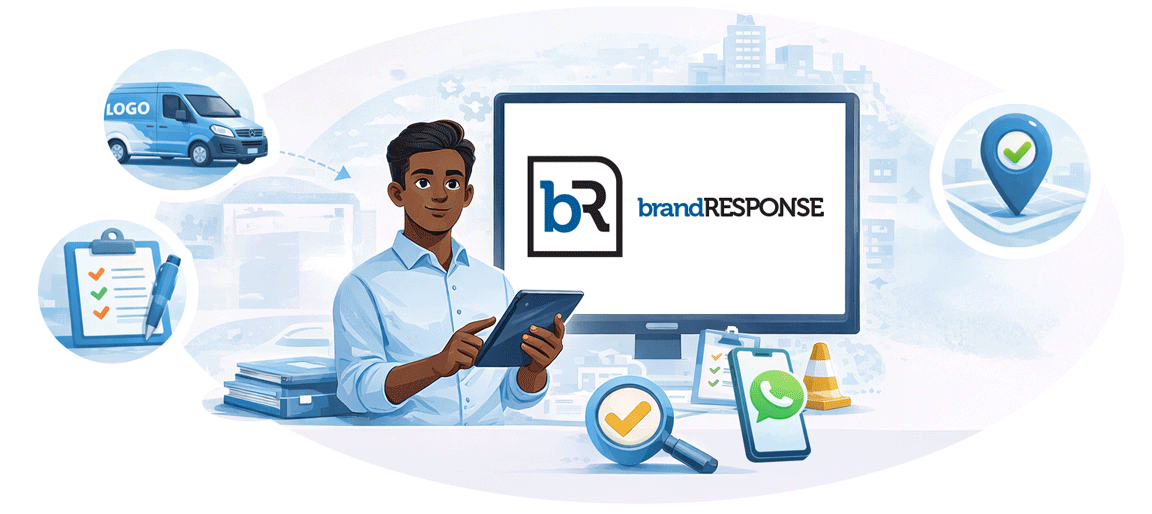
This is the gap brandRESPONSE was built to close.


brandRESPONSE is a proprietary platform designed to give enterprise marketing teams real-time visibility and control over fleet branding programs.

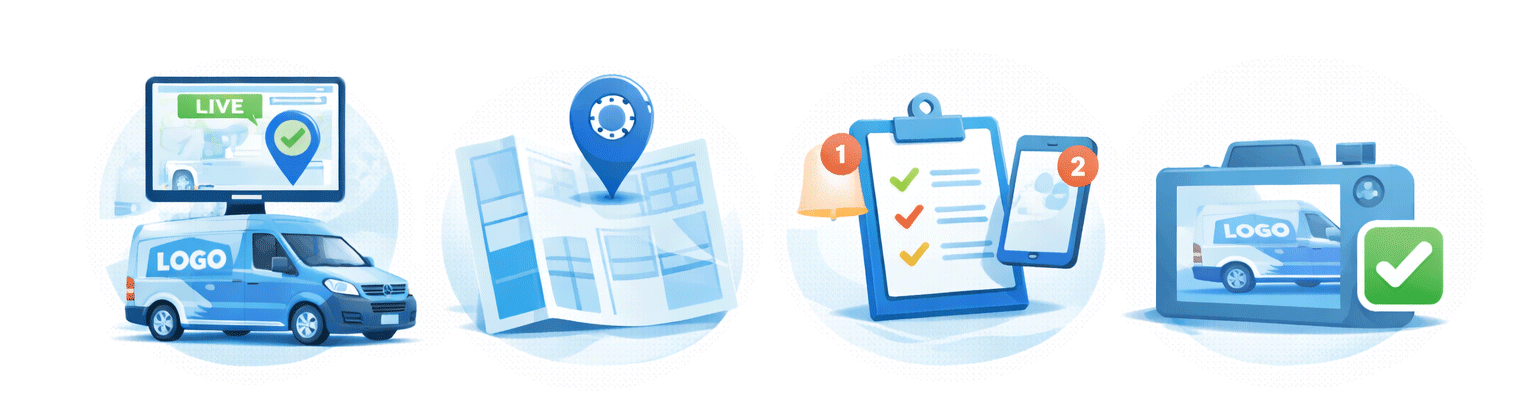
Instead of managing fleet graphics through spreadsheets, emails, and vendor updates, brandRESPONSE provides a centralized system of record that shows:

  • What is live across your fleet
  • Where assets are installed, down to the vehicle level
  • Status updates throughout each rollout phase
  • Photo-verified installs for proof of execution

This turns fleet branding into a governed marketing channel, not something teams simply hope is working.


With brandRESPONSE fleet branding stops being “out of sight, out of mind.”

Marketing teams gain:

  • Confidence in execution
  • Visibility for leadership
  • Accountability across regions and vendors
  • A direct connection between strategy and real-world deployment

Most importantly, fleet vehicles are treated like what they already are: a high-impact brand channel, not a production afterthought.


Can you confidently see how your brand is showing up on the road right now? Or are you relying on assumptions?

If it is the latter, you are not alone. But you do not have to stay there.

Learn how brandRESPONSE gives marketing leaders full visibility and control over fleet branding programs.