
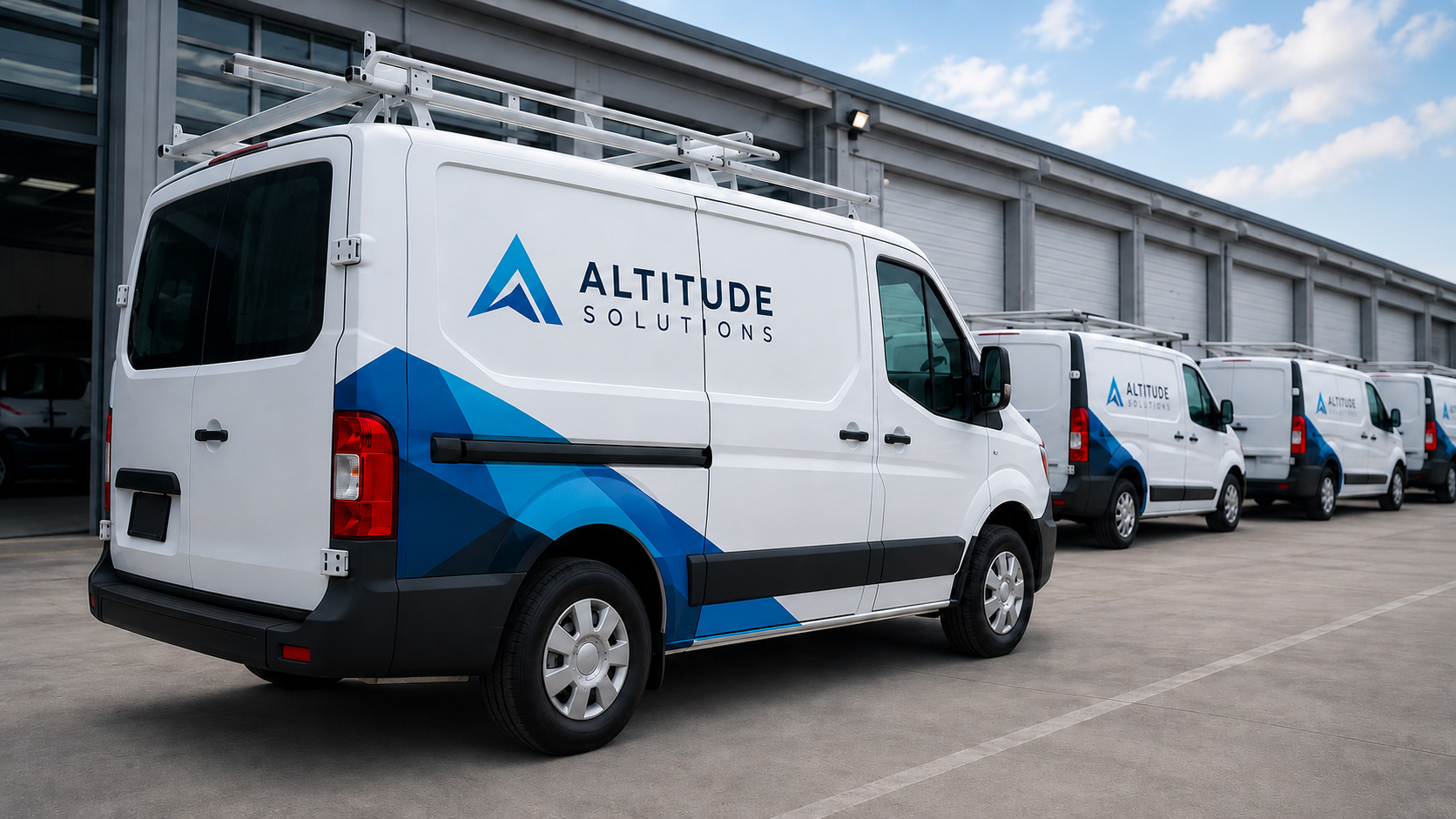
Leased vehicles can solve a lot of fleet problems.
They help companies add capacity, replace aging assets, respond to seasonal demand, support new markets, or move quickly after growth. However, they also create a branding question that many teams do not think through early enough:
Can you wrap a leased vehicle?
In many cases, yes. But fleet managers should not treat a leased vehicle the same way they treat a company-owned asset. Before graphics go on the vehicle, the team needs to check the lease terms, vehicle condition, material choice, installation plan, and removal requirements.
That step matters because the vehicle eventually has to go back.
A wrap may look great while the vehicle works for your brand. But if the lease restricts graphics, the paint has problems, or removal creates damage, the project can cost more than expected.
So before you brand a leased fleet vehicle, slow down and confirm what the vehicle, the lease, and the business actually allow.
Can You Wrap a Leased Vehicle?
Yes, many companies can wrap or brand leased vehicles, especially when they use removable graphics and return the vehicle in the required condition.
However, the lease agreement controls the rules. Some agreements allow non-permanent graphics. Others restrict vehicle alterations, adhesive materials, full wraps, or anything that changes the return condition. Several wrap providers note that leased vehicles often can receive wraps as long as the modification remains removable and the vehicle returns in acceptable condition, but the lease terms still matter.
For fleet managers, that means one thing: check before you install.
Do not assume the vehicle qualifies for a full wrap just because vinyl can come off. Instead, review the lease, talk to the leasing company if needed, and document the vehicle before the graphics go on.
1. Check the Lease Agreement First
Start with the lease agreement.
Look for language about vehicle alterations, decals, wraps, adhesive graphics, paint condition, removal requirements, and end-of-term return standards. If the agreement does not clearly answer the question, ask the leasing company or fleet lessor in writing.
This step helps you avoid problems later.
For example, the lease may allow temporary or removable graphics but require full removal before return. It may also require the vehicle to come back with no adhesive residue, paint damage, ghosting, or visible surface changes.
Before installation, confirm:
- Whether the lease allows graphics
- Whether the lessor requires approval
- Whether full wraps, partial wraps, or decals are allowed
- Whether graphics must come off before return
- Who handles removal
- What condition the vehicle must be in at turn-in
- Whether any penalties apply for damage or residue
Once you know the rules, you can choose the right graphics approach.
2. Choose Removable Vehicle Graphics When Flexibility Matters
Next, think about the material.
A leased vehicle often needs a graphics solution that looks professional while the asset stays in service and then comes off cleanly when the lease ends. That is why removable vehicle graphics often make more sense than treating the vehicle like a permanent wrap project.
3M specifically notes that temporary graphic wraps can help companies brand leased trucks and vans with removable wrap films. 3M also describes changeable graphic films as short-term vinyl films designed for flexibility, durability, conformability, and easier removal, with an expected performance life of up to two years depending on use.
That does not mean every leased vehicle needs the same material. The right option depends on the vehicle surface, lease length, brand visibility, weather exposure, washing, graphics coverage, and removal timeline.
3. Inspect the Vehicle Before You Wrap It
After you confirm the lease terms, inspect the vehicle.
A leased vehicle may look clean from a distance but still have issues that affect installation or removal. Dents, scratches, rust, peeling paint, old decals, poor paint repairs, and worn surfaces can all create problems.
This matters because the wrap depends on the surface underneath it.
Before graphics go on, document:
- Paint condition
- Existing scratches or dents
- Rust or corrosion
- Peeling clear coat
- Previous body repairs
- Old decal residue
- Areas with chipped paint
- Any panels that may need repair first
Take photos before installation. That gives the fleet team, graphics provider, and lessor a clear record of the vehicle’s condition before branding begins.
4. Match the Graphics to the Lease Term
Then, match the graphics plan to how long the vehicle will stay in the fleet.
If the lease only has a few months left, a full wrap may not make sense. The installation cost, removal cost, vehicle downtime, and return requirements may outweigh the value.
However, if the leased vehicle will represent the brand for several years, a more complete graphics package may make sense.
Ask these questions before choosing the graphics:
- How long will the vehicle stay in service?
- How visible is the vehicle to customers?
- Does it need full branding or simple identification?
- Will the company return, renew, or buy out the lease?
- Will the graphics need to come off soon?
- Does the brand campaign have an end date?
From there, you can choose full graphics, partial graphics, spot decals, temporary graphics, or a lighter branding package.
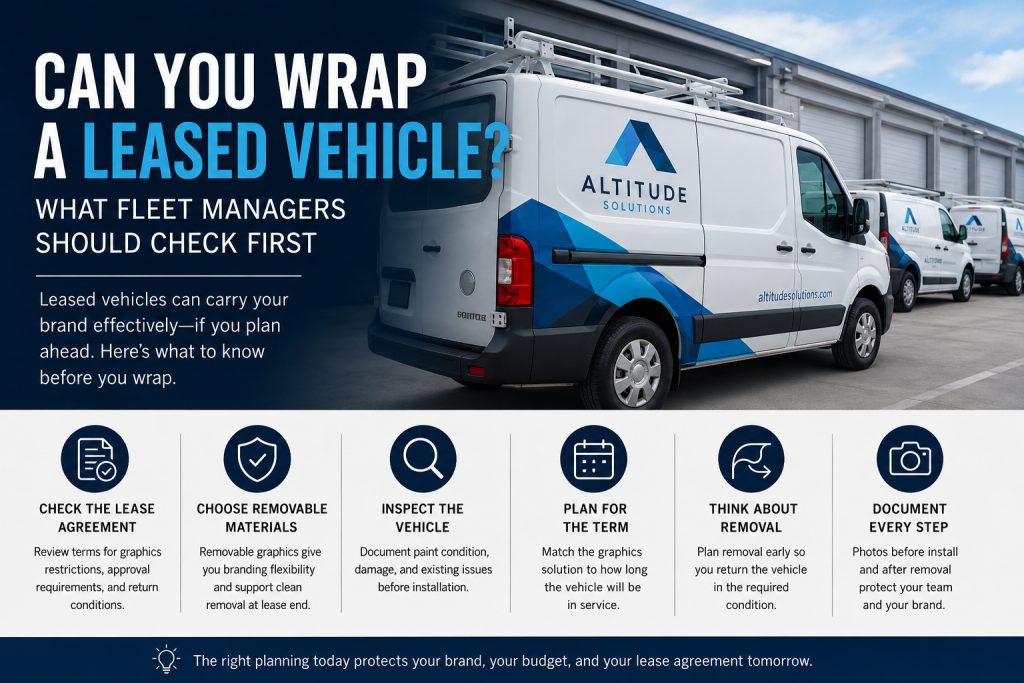
5. Think About Removal Before Installation
Fleet teams often focus on installation first. However, leased vehicles require a removal plan from the beginning.
Eventually, someone has to remove the graphics. If the team waits until the vehicle return date, the process can become rushed and expensive.
Before installation, decide:
- When the graphics need to come off
- Who will remove them
- Where removal will happen
- How much time removal may take
- What photos the team needs after removal
- What condition the vehicle must meet at return
- Whether the same provider should install and remove the graphics
This matters because removal can reveal problems that no one noticed earlier. Old paint, weak clear coat, previous repairs, or improper material choices can make the process harder.
A good removal plan protects the vehicle and the brand.
6. Use Temporary Graphics for Campaigns, Rentals, or Short-Term Routes
Leased vehicles often support temporary business needs. So, in many cases, temporary vehicle graphics may fit better than permanent-style fleet branding.
Temporary graphics can help with:
- Seasonal routes
- Short-term service coverage
- Market launches
- Event vehicles
- Rental vehicles
- Overflow capacity
- Pilot programs
- Acquisition transitions
- Vehicles waiting for a permanent fleet rebrand
This approach gives the company a branded presence without locking the vehicle into a long-term design.
It also helps the team avoid overinvesting in assets that may leave the fleet soon.
7. Keep Brand Standards Consistent
Even if the vehicle is leased, rented, or temporary, customers still see it as part of the brand.
Because of that, the graphics should not look improvised. The vehicle may carry a smaller graphics package, but it still needs to follow the brand standards.
That includes:
- Logo placement
- Color use
- Contact information
- Website URL
- Service messaging
- Unit numbers
- Safety markings
- DOT or compliance markings
- Reflective graphics, if needed
- Proof photo requirements
Temporary does not have to mean inconsistent. A leased vehicle can still look like it belongs to the fleet.
8. Coordinate Installation Around Vehicle Availability
Leased vehicles still need to work.
They may run routes, visit customers, carry equipment, or support branch operations. Because of that, installation planning matters just as much as material choice.
Before the installation date, confirm:
- Where the vehicle will be
- Who controls vehicle access
- Whether the vehicle will arrive clean
- Whether installers need after-hours access
- How long the vehicle can stay out of service
- Whether old graphics need removal first
- Who approves the final installation
- Who receives proof photos
That coordination helps the team avoid missed appointments, rushed installs, and inconsistent results.
When Should You Not Wrap a Leased Vehicle?
Sometimes, the best answer is no.
Do not move forward with leased vehicle graphics until you resolve the issues below:
- The lease does not allow graphics
- The lessor will not approve the application
- The vehicle has damaged paint or rust
- The lease ends too soon to justify the cost
- The vehicle needs body repair first
- The return condition requirements are unclear
- The team does not have a removal plan
- The vehicle cannot come out of service long enough
- The brand need is too short-term for a full wrap
In those cases, fleet managers should consider spot graphics, removable decals, magnetic signs, temporary graphics, or no branding at all.
How Signature Helps With Leased Vehicle Graphics
Signature Graphics helps fleet managers and brand teams choose the right graphics approach for leased, rented, and short-term fleet assets.
That means looking at the lease terms, vehicle condition, brand standards, material needs, installation timing, and removal plan before production starts.
For some leased vehicles, a full graphics package may work. For others, removable graphics, temporary campaign graphics, or a lighter decal package may make more sense.
The goal is simple: make the vehicle represent the brand while it works, then keep the process organized when the graphics need to change or come off.
FAQs About Leased Vehicle Wraps
Can you wrap a leased vehicle?
Yes, many leased vehicles can receive wraps or graphics, but the lease agreement decides what the company can and cannot do. Fleet managers should check the lease terms and get approval when the agreement requires it.
Do leased vehicle wraps have to come off before return?
Often, yes. Many lease arrangements require the vehicle to return in its original or approved condition. Because of that, teams should plan removal before installation begins.
Are removable graphics better for leased vehicles?
Usually, removable graphics make sense for leased vehicles because they give companies branding flexibility and support cleaner removal. However, the right material depends on the vehicle, lease term, surface condition, and graphics timeline.
Can a leased vehicle wrap damage paint?
A wrap can create problems if the vehicle has weak paint, rust, peeling clear coat, poor repairs, or if the team uses the wrong material or removal process. That is why inspection and proper removal matter.
Can you put temporary graphics on a rental vehicle?
Sometimes. The rental agreement controls what the company can add to the vehicle. Always confirm approval first, then choose a material designed for short-term use and clean removal.
What should fleet managers check before wrapping leased vehicles?
Fleet managers should check the lease terms, approval requirements, vehicle condition, paint quality, material choice, installation timing, removal plan, return requirements, and proof photo process.